Mid-Flight Miracle: Baby Born to JFK, 'Kennedy' Suggestion Goes Viral
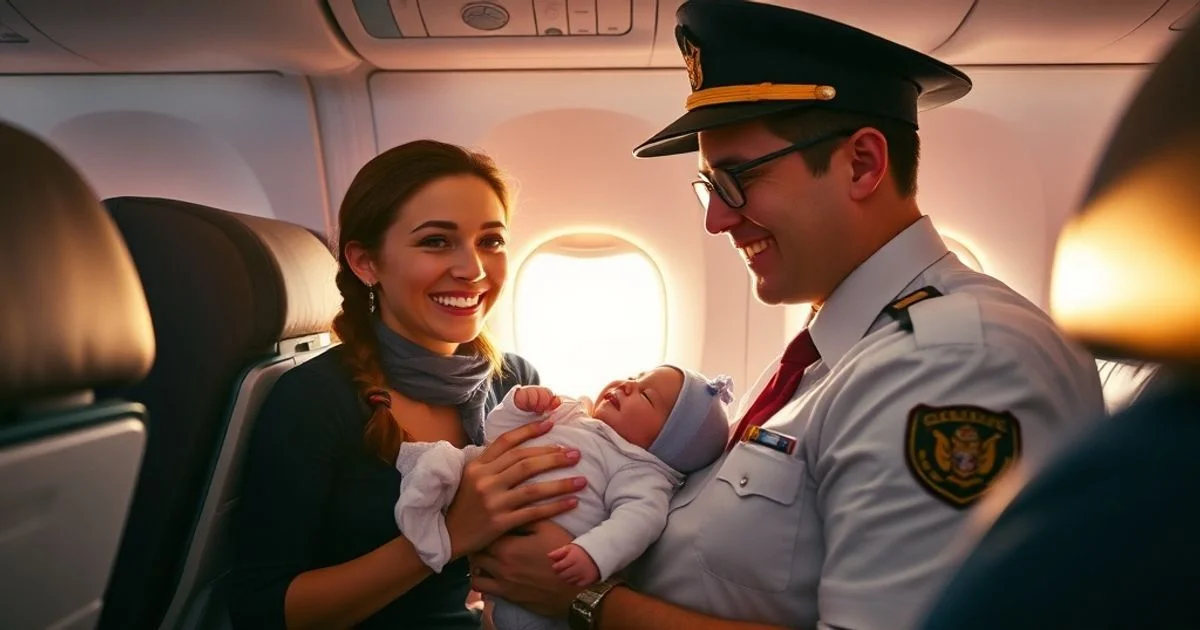
A true mid-flight miracle unfolded on a recent international flight bound for New York's JFK Airport, where a baby was born mid-journey, quickly turning the Air Traffic Control's 'Kennedy' name suggestion into a viral sensation. The hum of jet engines usually signifies routine travel, but for passengers on this particular flight, the journey became anything but ordinary. This incredible story of a Baby Born Mid-Flight to JFK; ATC 'Kennedy' Suggestion Goes Viral is a testament to human resilience and the unexpected joys that can occur at 35,000 feet. The dramatic delivery, coupled with a memorable exchange with Air Traffic Control, quickly became a sensation, highlighting a moment of pure serendipity that transcended the typical news cycle and captured hearts globally.
- An Unexpected Arrival: The Mid-Flight Birth
- The Viral ATC 'Kennedy' Suggestion Following a Mid-Flight Birth to JFK
- Aviation and Mid-Flight Births: A Rare Occurrence
- The Human Element: Stories of Joy and Connection
- What's Next for the Mother and Baby?
- Conclusion: A Tale of the Skies That Went Viral
- Frequently Asked Questions
- Further Reading & Resources
An Unexpected Arrival: The Mid-Flight Birth
The flight, which was en route to New York's John F. Kennedy International Airport, was well into its journey when a pregnant passenger went into labor. What started as a regular transatlantic crossing quickly transformed into an impromptu delivery room as the aircraft's crew and, in some cases, medically trained passengers, sprang into action. Mid-flight births are exceptionally rare, making each instance a unique and often heartwarming news story that captures global attention.
The Dramatic Onboard Scenes
As the mother's labor progressed, the cabin crew, trained for a variety of emergencies, swiftly prepared a section of the aircraft for the delivery. This often involves clearing space, gathering medical supplies from the onboard first-aid kits, and maintaining a calm, reassuring environment for the mother. Announcements were made to ascertain if any medical professionals were onboard, and thankfully, in many such cases, there are, providing crucial assistance. In this instance, the presence of trained medical personnel among the passengers proved invaluable, offering expertise beyond basic first aid. The privacy of the passenger was maintained while ensuring she received the best possible care under these extraordinary circumstances. Fellow passengers, initially surprised and perhaps a little anxious, often rally to support the crew and mother, creating a unique bond of shared experience and a sense of collective anticipation. The successful delivery of a healthy baby amidst the confines and inherent challenges of an aircraft cabin is a profound testament to the quick thinking and preparedness of airline staff, the incredible strength and courage of the mother, and the serendipitous assistance from medical professionals onboard. Upon the baby's arrival, initial health assessments are performed, and the joyous news is typically relayed to the flight deck.
The Viral ATC 'Kennedy' Suggestion Following a Mid-Flight Birth to JFK
The true viral moment of this story, elevating it from a remarkable personal event to a global phenomenon, came during the communication between the flight crew and Air Traffic Control (ATC) at JFK. Following the successful birth, the pilot relayed the joyous news to ground control. It was during this exchange that an ATC controller, perhaps moved by the unique circumstances of the birth and the destination, playfully suggested a name for the newborn: Kennedy.
The flight in question was Caribbean Airlines Flight BW005, originating from Kingston, Jamaica, and bound for JFK. The incident occurred on April 4, 2026, as the plane was on its final approach to New York. The pilot informed air traffic control about the passenger in labor, prompting controllers to expedite the aircraft's landing with direct routing and priority clearance on Runway 04R.
The memorable exchange, which quickly circulated online, involved a ground controller asking the pilot if the baby had been delivered. Upon confirmation that the baby was indeed "out," the controller lightheartedly suggested, "All right, tell her she's got to name it Kennedy." The pilot reportedly laughed and replied, "Ahh Kennedy. Will do." This charming interaction resonated with the public, adding a touch of humor and warmth to an already extraordinary event, much like other unexpected moments that have captured public attention, such as a driver's viral gesture that sparked a tips frenzy.
A Name for the Newborn
While the playful suggestion from ATC quickly went viral and captured the imagination of people worldwide, the ultimate decision on the baby's name rests, of course, with the parents. The idea of naming a child after the place or circumstances of their birth is a long-standing tradition in many cultures, serving as a permanent reminder of a significant life event. Many online discussions ensued about the possibility of the baby being named Kennedy, either as a first or middle name, to commemorate the unique circumstances of its birth and its arrival at the iconic airport. However, Caribbean Airlines did not release further details about the family, respecting their privacy. Regardless of the chosen name, the story itself has ensured that this newborn will forever have a remarkable tale of their entry into the world, a narrative woven into the fabric of aviation lore and personal history.
Aviation and Mid-Flight Births: A Rare Occurrence
Mid-flight births, while captivating, are exceptionally rare. The controlled environment of an aircraft, coupled with pre-flight screening for late-term pregnancies, means such events are statistically improbable. A 2020 study by Travis W. Heggie, published in the National Library of Medicine, found that between 1929 and 2018, there were 74 infants born on 73 commercial flights. The study highlighted that 71 of these babies survived delivery, underscoring the remarkable success rate given the challenging environment. These events often require quick thinking, improvisation, and sometimes the fortunate presence of medical professionals among the passengers, making each successful delivery a mini-miracle of coordination and human resilience.
Airline Policies Regarding Pregnant Passengers
To mitigate the risks of mid-flight births, most commercial airlines have stringent policies regarding travel for pregnant passengers. Generally, airlines allow pregnant travelers to fly until 36 weeks' gestation for domestic flights. For international travel, some airlines may have earlier limits or require documentation of gestational age and a medical certificate from a doctor, stating fitness to fly and the estimated due date. For instance, Delta Air Lines does not impose restrictions or require a medical certificate but suggests checking with a doctor if traveling after the eighth month. Southwest Airlines recommends against air travel beginning at the 38th week of pregnancy. American Airlines requires a doctor's certificate if the due date is within four weeks of the flight, and for domestic flights under five hours, travel is not permitted within seven days before and after the delivery date without special approval and a physician's form. Caribbean Airlines, the airline involved in this incident, allows expectant mothers to travel without medical clearance up to approximately 32 weeks, with mandatory clearance required until the 35th week, and no passengers accepted after 35 weeks. These policies are rigorously enforced to ensure the safety and well-being of both the mother and the unborn child, although unexpected preterm labor can still occur despite all precautions.
The Human Element: Stories of Joy and Connection
Beyond the technicalities of aviation and medical protocols, stories of mid-flight births often resonate deeply with the public due to their powerful human element. They are tales of unexpected joy, human connection, and the miracle of life unfolding in extraordinary circumstances. The cabin crew, often lauded for their professionalism and calm demeanor during these incidents, play a crucial role in ensuring a safe delivery, often performing duties far beyond their standard training. The shared experience of witnessing a new life come into the world often creates a lasting memory for everyone on board, transforming a routine journey into an unforgettable one, solidifying bonds between strangers through a shared, profound event.
Global Reaction to the News
The news of the mid-flight birth to JFK and the amusing ATC "Kennedy" suggestion spread rapidly across social media platforms and news outlets worldwide. The audio recording of the ATC exchange, which included the controller's playful suggestion, quickly went viral. People shared the story with delight, charmed by the controller's humor and the incredible timing of the birth. It became a feel-good story amidst often-somber news cycles, prompting discussions about unique birth stories and the memorable names given to children born under such circumstances, reminiscent of the viral phenomenon surrounding a Senior Skip Day Wedding Crasher who became a high school legend. Previous mid-air births have also garnered significant attention, with some airlines even offering lifetime free flights or large sums of frequent flyer miles to the newborns, though this is not a universal practice and often depends on the individual airline's discretion and policy at the time.
What's Next for the Mother and Baby?
Upon landing at JFK, medical teams were promptly on standby to attend to the mother and her newborn, providing immediate care and ensuring their well-being. This typically involves a thorough medical examination for both, ensuring no complications from the high-altitude birth, and providing any necessary post-natal care.
A common question that arises with mid-air births concerns the baby's citizenship. This can be a complex issue, often depending on factors such as the airline's country of registration, the airspace the plane was in at the moment of birth, and the nationality of the parents. In the case of a birth over U.S. airspace, the child would typically be considered a U.S. citizen under the 14th Amendment and State Department regulations, following the principle of jus soli. However, if the birth occurred outside U.S. airspace, even minutes earlier, the child might not automatically be a U.S. citizen, and could instead acquire the citizenship of the airline's registered country (if jus soli applies there) or their parents' nationality (jus sanguinis). Interestingly, even if born in the air, the birth certificate is almost always issued in the place where the plane lands, which in this instance was New York, with a notation about the in-flight birth. These legal intricacies add another layer of fascinating detail to an already extraordinary event, though the immediate focus remains on the family's health and recovery and their joyous new beginning.
Conclusion: A Tale of the Skies That Went Viral
The recent incident involving a Baby Born Mid-Flight to JFK; ATC 'Kennedy' Suggestion Goes Viral is a captivating narrative that highlights the unexpected wonders of life and the remarkable professionalism of airline crews and air traffic controllers. This extraordinary event, from the dramatic delivery high above the clouds to the charming exchange with ground control, has created a heartwarming story that resonated globally. It serves as a powerful reminder that even in our highly structured world of travel and technology, life can surprise us with its most fundamental and miraculous events, leaving us all to marvel at the journey of a new beginning, a journey that began literally above the clouds.
Frequently Asked Questions
Q: Is a baby born mid-flight a citizen of the destination country?
A: The citizenship of a baby born mid-flight is a complex issue. It often depends on the airspace the plane was in at the moment of birth, the airline's country of registration, and the nationality of the parents. If born over U.S. airspace, they are usually considered a U.S. citizen.
Q: What are airline policies for pregnant passengers?
A: Most commercial airlines have policies that restrict travel for pregnant passengers after 36 weeks for domestic flights, and often earlier for international travel. A medical certificate from a doctor, confirming fitness to fly and the estimated due date, may be required closer to the due date.
Q: How common are mid-flight births?
A: Mid-flight births are exceptionally rare events. Studies indicate fewer than 100 recorded instances on commercial flights in nearly a century, highlighting their unique and infrequent nature despite the millions of flights taken annually.