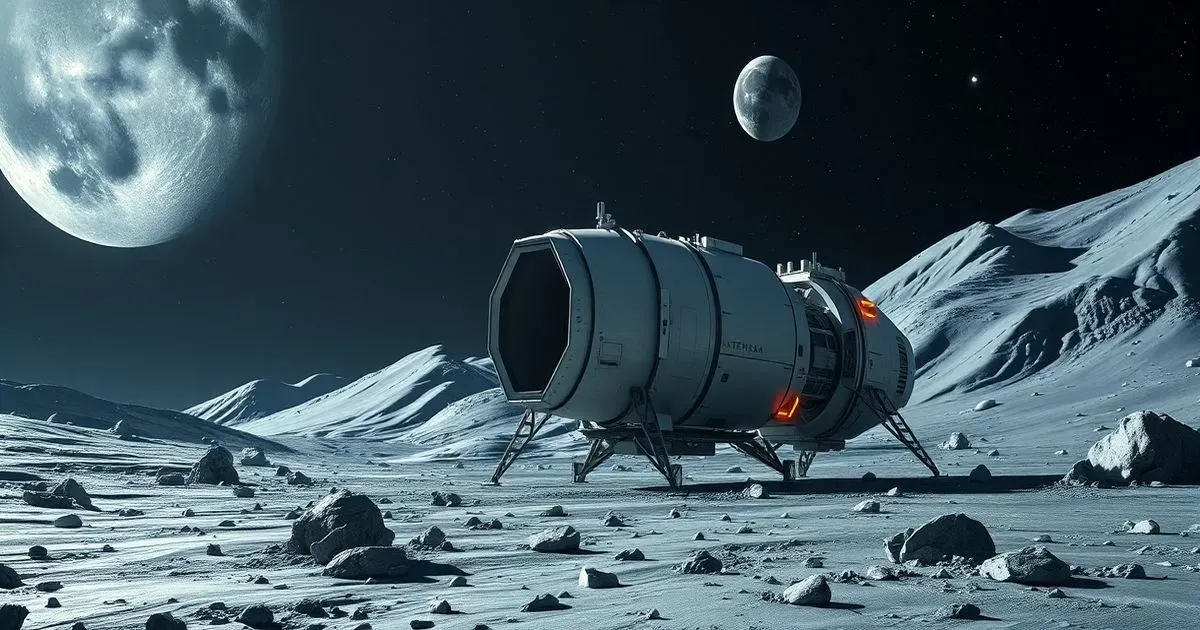
As Artemis 2 preps for its lunar mission, signaling a new era of exploration, the National Aeronautics and Space Administration (NASA) stands on the cusp of an unprecedented journey, marking a monumental step forward in human spaceflight. This mission, aptly described as "Artemis 2 Preps for Lunar Mission: New Era of Exploration," will see humans venture to the vicinity of the Moon for the first time in over 50 years, since the Apollo era. The ambitious flight aims to test critical systems and capabilities of the Orion spacecraft and the Space Launch System (SLS) rocket, paving the way for future lunar landings and ultimately, human exploration of Mars. This crewed flyby represents a crucial chapter in humanity's quest to extend its presence beyond Earth orbit and truly embark on a new era of exploration.
- A Return to Lunar Realms: The Artemis Program's Grand Vision
- Artemis 2: The First Crewed Step Toward the Moon
- The Technology Powering the Mission
- Challenges and Preparation
- The Broader Impact and Future of Exploration
- Artemis 2 Preps for Lunar Mission: New Era of Exploration
- Frequently Asked Questions
- Further Reading & Resources
A Return to Lunar Realms: The Artemis Program's Grand Vision
The Artemis program, spearheaded by NASA, represents a multi-mission endeavor to establish a long-term human presence on the Moon and utilize it as a stepping stone for deeper space exploration, including missions to Mars. Named after the Greek goddess of the Moon and twin sister of Apollo, the program builds upon the legacy of past lunar missions while incorporating advanced technology and international partnerships. It's a testament to global ambition and the collaborative spirit needed for such monumental undertakings, reflecting broader global shifts in space policy and collaboration.
Artemis I: Laying the Groundwork
The journey to Artemis 2 began with the successful uncrewed Artemis I mission in late 2022. This 25-day flight around the Moon and back rigorously tested the SLS rocket and the Orion spacecraft without astronauts on board. The data collected from Artemis I was invaluable, providing crucial insights into the performance of the vehicles and ground systems, enabling engineers to refine designs and minimize risks for subsequent crewed missions. It demonstrated the readiness of the hardware for human occupancy, setting the stage for the groundbreaking flight of Artemis 2 and proving the fundamental architecture of the deep-space transportation system.
Objectives of the Artemis Program
The overarching goals of the Artemis program are multifaceted and aim to achieve significant advancements in space exploration, laying the foundation for an enduring human presence beyond Earth:
-
Establish a Sustainable Lunar Presence: Unlike the brief visits of the Apollo era, Artemis seeks to build a long-term human presence on the lunar surface, potentially including a base camp near the Moon's south pole. This sustainable presence is key to unlocking the Moon's scientific and economic potential.
-
Scientific Discovery: The program aims to conduct extensive scientific research on the Moon, including studying lunar geology, the effects of deep-space radiation on the human body, and the presence of water ice at the lunar poles. The south pole, in particular, holds significant scientific interest due to its permanently shadowed regions believed to harbor large reserves of water ice.
-
Technology Development: Artemis serves as a testbed for developing new technologies, from advanced rockets and spacesuits to communication systems. These innovations are not only crucial for future deep-space missions but also often lead to spin-off technologies benefiting life on Earth.
-
International and Commercial Partnerships: A key difference from Apollo, Artemis emphasizes collaboration with commercial companies and international space agencies. This global effort fosters shared knowledge, resources, and risk, making ambitious missions more feasible and distributing the benefits of space exploration more broadly. This approach aligns with the wider trend of Unpacking Global Geopolitical Shifts: A New Era Unfolds where international cooperation is increasingly vital in complex endeavors.
-
Paving the Way to Mars: Ultimately, the Moon will serve as a proving ground for technologies and operational procedures necessary for sending humans to Mars. Mastering lunar operations, from resource utilization to long-duration stays, is a critical precursor to Martian expeditions, making the Artemis program a foundational step towards interplanetary travel.
Artemis 2: The First Crewed Step Toward the Moon
Artemis 2 is set to be the first crewed mission of the Artemis program and the first time humans will journey beyond low Earth orbit since Apollo 17 in 1972. This 10-day mission will carry four astronauts on a free-return trajectory around the Moon and back to Earth, pushing the boundaries of human endurance and technological capability in deep space.
The Historic Crew
The crew for Artemis 2 comprises four highly experienced astronauts, making history in several respects and embodying the diverse, international spirit of modern space exploration:
-
Commander Reid Wiseman (NASA): A veteran of the International Space Station (ISS), Wiseman previously served as flight engineer for Expedition 41. His extensive experience in orbital mechanics and spacecraft operations will be invaluable.
-
Pilot Victor Glover (NASA): Glover will become the first person of color to travel around the Moon. He previously flew on the SpaceX Crew-1 mission and Expedition 64/65 to the ISS, bringing critical experience with commercial crew vehicles.
-
Mission Specialist Christina Koch (NASA): Koch will be the first woman to journey to the Moon's vicinity. She holds the record for the longest single spaceflight by a woman (328 days) and participated in the first all-female spacewalk, demonstrating exceptional resilience.
-
Mission Specialist Jeremy Hansen (Canadian Space Agency): Hansen will be the first non-American to travel around the Moon, representing Canada's significant contribution to the mission through the Canadarm3 on the Lunar Gateway. His selection underscores the international nature of the Artemis program.
This diverse crew embodies the international collaborative spirit of the Artemis program and will inspire a new generation of explorers globally, showcasing humanity's shared ambition.
Mission Objectives and Key Tests
Artemis 2 is primarily a test flight, designed to validate the critical systems required for future crewed lunar landings. The astronauts will rigorously assess the performance of the Orion spacecraft and its various components in deep space conditions. Key objectives include:
-
Orion Spacecraft Validation: Confirming that the Orion capsule, built by Lockheed Martin, can safely carry and sustain a crew beyond low Earth orbit. This involves comprehensive testing of its life support, environmental control, communication, and propulsion systems, ensuring every aspect functions perfectly in the harsh environment of deep space.
-
Deep-Space Communications and Navigation: Evaluating the Orion Artemis II Optical Communications System (O2O) and other advanced navigation and communication systems. The O2O system, utilizing lasers, promises significantly higher data rates than traditional radio frequency systems, critical for real-time data transmission and command execution during lunar missions.
-
Crew Interfaces and Habitability: Assessing how the crew interacts with the spacecraft's systems and evaluating the living conditions within Orion during a 10-day mission. This includes examining ergonomics, efficiency of procedures, and the psychological impact of extended deep-space travel.
-
Manual Piloting and Proximity Operations: The crew will perform manual control tests and a proximity operations demonstration. These maneuvers are crucial for future docking procedures with elements like the Lunar Gateway and for precise orbital adjustments around the Moon, proving the crew's ability to take over in automated system failures.
-
Radiation Exposure Studies: Collecting data on the effects of deep-space radiation on human physiology, which is vital for planning longer-duration missions to Mars. Orion's advanced radiation shielding will be put to the test, and personal dosimeters worn by the crew will provide critical data. This research is also crucial for understanding and mitigating risks from phenomena like the Van Allen Probe A: Tracking a Nasa Satellite Crash and Space Debris Risks.
-
Heat Shield Performance: Testing Orion's heat shield during its high-speed reentry into Earth's atmosphere, ensuring its ability to protect the crew from the extreme temperatures (up to 2,760 degrees Celsius or 5,000 degrees Fahrenheit) generated upon returning from lunar velocities.
The Flight Plan: A Lunar Flyby
The 10-day mission will follow a precise itinerary, meticulously planned to maximize data collection and crew safety:
-
Launch and Earth Orbit: Artemis 2 will launch aboard the powerful Space Launch System (SLS) Block 1 rocket from Kennedy Space Center's Launch Complex 39B. After shedding its boosters and core stage, Orion will orbit Earth twice to test initial systems and prepare for the trans-lunar injection burn.
-
Trans-Lunar Injection: A critical departure burn, lasting several minutes, will propel Orion towards the Moon, accelerating it beyond Earth's gravitational influence.
-
Journey to the Moon: As Orion travels away from Earth, the crew will continue to evaluate spacecraft systems, perform manual flight checks, and monitor their health and the spacecraft's performance, communicating frequently with mission control.
-
Lunar Flyby: Orion will slingshot around the Moon, reaching a maximum distance of approximately 8,000 kilometers (5,000 miles) beyond the lunar surface. This close approach will allow for photographic opportunities and further system checks in the lunar environment.
-
Return to Earth: Using the Moon's gravity for a free-return trajectory, the spacecraft will head back towards Earth, a fuel-efficient path that adds a layer of safety in case of propulsion system issues.
-
Reentry and Splashdown: Orion will re-enter Earth's atmosphere at extreme speeds (around 40,000 km/h or 25,000 mph), deploying multiple parachutes in a precise sequence before splashing down in the Pacific Ocean, where the crew will be recovered by U.S. Navy vessels.
The Technology Powering the Mission
The success of Artemis 2 hinges on the advanced technologies developed and refined for deep-space exploration, representing the pinnacle of modern aerospace engineering.
Space Launch System (SLS) Rocket
The SLS is NASA's most powerful rocket to date, designed to send Orion, astronauts, and large cargo directly to the Moon in a single launch. The Block 1 variant, used for Artemis 2, stands at 98 meters (322 feet) tall and demonstrates an immense capability for crewed missions. It builds upon the legacy of Space Shuttle–derived hardware, incorporating four powerful RS-25 engines (which previously powered the Space Shuttle) and two five-segment solid rocket boosters (SRBs) adapted from the Shuttle's four-segment boosters. These SRBs alone provide over 75% of the total thrust during the first two minutes of flight, generating 8.8 million pounds of thrust at launch, critical for achieving the velocities needed to escape Earth's gravity and reach the Moon. Future iterations, like the Block 1B and Block 2, will offer even greater lift capabilities for heavier payloads and Mars missions.
Orion Spacecraft
The Orion Multi-Purpose Crew Vehicle (MPCV) is the crewed spacecraft at the heart of the Artemis missions. Built by Lockheed Martin, it is the only human-rated spacecraft capable of carrying astronauts beyond low-Earth orbit and safely returning them. Key features and components of Orion include:
-
Crew Module (CM): Designed to accommodate four astronauts, it serves as their habitat during the mission and the primary vehicle for reentry. It is equipped with an advanced avionics system, displays, and controls for crew interaction.
-
European Service Module (ESM): Manufactured by Airbus Defence and Space for ESA, the ESM is a critical component providing propulsion, electrical power, water, oxygen, and nitrogen to the crew module. Its main engine is a refurbished Space Shuttle Orbital Maneuvering System (OMS) engine, backed up by 24 smaller thrusters for precise maneuvering. This module showcases the strong international collaboration in the Artemis program.
-
Life Support Systems: Advanced Environmental Control and Life Support Systems (ECLSS) ensure breathable air, comfortable temperatures, and waste management for the crew over extended periods, crucial for preventing health issues during long-duration spaceflight.
-
Launch Abort System (LAS): A crucial safety feature mounted on top of the crew module, designed to pull the crew module rapidly away from the rocket in case of an emergency during launch or ascent, ensuring astronaut safety.
-
Heat Shield: A robust, ablative heat shield measuring 5 meters (16.5 feet) in diameter, capable of withstanding the extreme temperatures of atmospheric reentry at lunar return velocities, protecting the crew from incineration.
-
Automated Docking System: Equipped with advanced sensors, cameras, and lidar, this system facilitates precision docking operations. It will be critical for future missions involving the Lunar Gateway, a planned small space station in lunar orbit that will serve as a staging point for lunar surface missions.
Challenges and Preparation
Preparing for a mission of this magnitude involves extensive testing, meticulous planning, and overcoming various technical challenges. The complexities of integrating human-rated spacecraft with the most powerful rocket in the world demand rigorous attention to detail and a commitment to safety above all else.
Recent reports indicate that the launch window for Artemis 2 has been adjusted, with NASA currently targeting no earlier than September 2025. This revision followed a series of technical issues detected during integrated testing and wet dress rehearsals. For instance, a liquid hydrogen leak was detected during a "wet dress rehearsal" for the SLS core stage, requiring meticulous troubleshooting and repair. Additionally, a valve issue with the Orion crew module hatch pressurization system required additional maintenance and validation. More recently, the SLS rocket underwent a rollback to the Vehicle Assembly Building for repairs related to a helium system issue, crucial for proper tank pressurization. These delays, though frustrating, are a testament to the rigorous safety protocols and meticulous attention to detail required for human spaceflight, ensuring that every component performs optimally before risking human lives. The lessons learned from these preparations contribute significantly to aerospace engineering knowledge, benefiting future endeavors.
The crew has also been undergoing rigorous training, spanning several years, to prepare for every phase of the flight. This includes:
- Simulations: Practicing every mission phase, from launch to reentry, in realistic simulators to build muscle memory and response protocols for both routine and emergency situations.
- Mission Rehearsals: Participating in full-scale integrated rehearsals with ground control teams, simulating actual mission timelines and communication flows.
- Survival Training: Preparing for potential splashdown recovery scenarios, including sea survival training.
- Operational Familiarization: Familiarizing themselves with Orion's controls, life support systems, and manual flight procedures, ensuring they can operate the spacecraft effectively in any contingency.
- Scientific Training: Understanding the scientific objectives and how to conduct experiments in a deep-space environment.
These extensive preparations ensure the crew is ready for the unique demands of a lunar flyby mission, where the margin for error is virtually nonexistent.
The Broader Impact and Future of Exploration
Artemis 2 is more than just a space mission; it represents a significant leap for humanity, marking a renewed commitment to human deep-space exploration. It aims to inspire a new generation of scientists, engineers, and explorers, much like the Apollo missions did five decades ago. The sheer ambition of sending humans back to the Moon's vicinity captures the imagination and underscores our species' innate drive to explore the unknown.
The scientific data gathered from Artemis 2, particularly concerning human physiology in deep space and the performance of critical systems, will be crucial for informing future, longer-duration missions. This includes not only deeper lunar exploration but also the ultimate goal of sending humans to Mars. The insights gained from managing radiation exposure, understanding psychological impacts of isolation, and refining life support systems will directly contribute to making Martian journeys feasible.
Following Artemis 2, the program plans to proceed with Artemis 3, which aims to land astronauts on the lunar surface, potentially at the unexplored lunar south pole. This mission will mark the first time a woman and a person of color walk on the Moon. Subsequent missions, Artemis 4 and Artemis 5, will involve the construction of the Lunar Gateway, a small but critical space station in lunar orbit that will serve as a staging point for lunar surface missions and a science outpost. The establishment of a permanent lunar base will further solidify humanity's presence beyond Earth, opening doors for lunar resource utilization, scientific observatories, and potentially even space tourism. This long-term vision positions the Moon not as an end destination, but as a stepping stone, a proving ground, and a valuable resource for extending human civilization into the solar system.
Artemis 2 Preps for Lunar Mission: New Era of Exploration
As the world watches, Artemis 2 Preps for Lunar Mission: New Era of Exploration represents a powerful statement of human ingenuity, collaboration, and our unyielding desire to push the boundaries of what is possible. This mission is not just about returning to the Moon; it's about building a sustainable future in space, unlocking new scientific discoveries, and ultimately, taking humanity one step closer to becoming an interplanetary species. The journey ahead is filled with challenges, technical hurdles, and immense risks, but the profound promise of a new era of exploration and the expansion of human presence beyond our home planet makes every preparation worthwhile. The success of Artemis 2 will not only be a triumph for NASA but for all of humankind, rekindling the spirit of exploration that defines us.
Frequently Asked Questions
Q: What is the main goal of the Artemis 2 mission?
A: Artemis 2's primary goal is to rigorously test the Orion spacecraft's critical systems in a deep-space environment with a human crew. This validation is essential to ensure the safety and functionality of the vehicle for future lunar landing missions.
Q: Who are the astronauts on the Artemis 2 crew?
A: The historic crew for Artemis 2 comprises NASA astronauts Reid Wiseman (Commander), Victor Glover (Pilot), Christina Koch (Mission Specialist), and Canadian Space Agency (CSA) astronaut Jeremy Hansen (Mission Specialist). This diverse team highlights international cooperation in space exploration.
Q: What makes the Artemis program different from the Apollo missions?
A: Unlike the brief visits of the Apollo era, the Artemis program aims to establish a sustainable, long-term human presence on the Moon. It emphasizes international and commercial partnerships, technology development for Mars, and scientific resource utilization, building a permanent lunar infrastructure.