Arjun Tendulkar's Viral Reply Shakes Cricket World: A Bold Stance

In a recent revelation that has significantly stirred discussions and truly underscores why Arjun Tendulkar's Viral Reply Shakes Cricket World, the young all-rounder articulated a remarkably candid and resolute perspective on navigating the immense pressures of his burgeoning career. His words, delivered in an interview, quickly became a focal point, resonating deeply within the cricketing fraternity and sparking a widespread conversation about mental fortitude, public scrutiny, and the unique challenges faced by athletes with a legendary surname. This bold stance has not only cemented his image as a cricketer of strong character but has also brought into sharp relief the evolving dynamics of media interaction and fan expectations in modern sports.
- Decoding the Viral Reply: Why Arjun Tendulkar's Stance Shakes Cricket World
- Navigating the Spotlight: Pressure and Pedigree
- IPL 2026: A New Chapter with Lucknow Super Giants
- Beyond the Bat: Old-School Values and Modern Challenges
- Social Media's Unforgiving Glare
- Expert Analysis: Decoding Arjun's Stance
- The Broader Impact on Young Cricketers
- Conclusion
- Frequently Asked Questions
- Further Reading & Resources
Decoding the Viral Reply: Why Arjun Tendulkar's Stance Shakes Cricket World
The cricket world was recently captivated by a straightforward yet profound statement from Arjun Tendulkar, which has since gone viral. In an interview with Shubhankar Mishra, when directly asked about his approach to criticism, Arjun unequivocally stated, "I don't fear criticism." This blunt, no-nonsense reply immediately grabbed headlines and social media attention, painting a vivid picture of a young athlete determined to carve his own path, unburdened by external judgments. His composure and clarity in addressing such a sensitive topic struck a chord with many, distinguishing him from many of his peers who often shy away from direct confrontation with public opinion.
Further cementing his independent spirit, Arjun also revealed a surprising detail about his social circle within the same interview. "I don't really have cricketer friends, most of my friends don't play cricket," he remarked. This admission, coming from the son of arguably the greatest cricketer of all time, Sachin Tendulkar, highlighted a conscious decision to maintain a life separate from the constant glare of the cricket ecosystem. It suggests a deliberate effort to foster connections outside the often-insular world of professional sport, perhaps as a mechanism to stay grounded and preserve a sense of normalcy amidst extraordinary circumstances. This dual revelation – his fearlessness towards criticism and his preference for non-cricketer friends – has been interpreted by many as a clear declaration of his individuality and a testament to his mental resilience.
The impact of this viral reply cannot be overstated. It has ignited conversations across various platforms, from sports channels to social media forums, about the psychological demands on young cricketers, especially those carrying the weight of familial legacy. Fans and pundits alike have weighed in, some applauding his maturity and self-awareness, while others have debated the implications of such a public declaration in a sport often characterized by guarded statements. Nevertheless, the unequivocal nature of his reply has undoubtedly left an indelible mark, demonstrating a maturity beyond his years and a clear understanding of the scrutiny that comes with his name.
Navigating the Spotlight: Pressure and Pedigree
The pressure on Arjun Tendulkar has been immense since his cricketing journey began. As the son of Sachin Tendulkar, the expectations placed upon him are arguably unparalleled in the sport. Every move, every performance, every public statement is magnified under the unrelenting lens of scrutiny. This constant comparison to his legendary father, who redefined batting records and became a global icon, is a burden few athletes ever experience. From his early days in junior cricket to his entry into the Indian Premier League (IPL), the narrative surrounding Arjun has often revolved around his lineage rather than his individual talent and efforts.
This intense spotlight often translates into significant online trolling and criticism. Arjun has, on various occasions, been the target of social media negativity, with many questioning his selection in teams like the Mumbai Indians based on merit rather than his surname. Critics often point to his statistical output, or perceived lack thereof, to fuel arguments of nepotism. This constant barrage of judgment, sometimes unfair and often personal, is a harsh reality for many public figures, but particularly acute for those in sports with such prominent family ties. The nature of these criticisms often ignores the developmental stages of a young athlete's career and the sheer difficulty of breaking into professional cricket, regardless of background.
The psychological toll of such sustained scrutiny can be profound. Athletes are increasingly speaking out about the importance of mental health, and Arjun's "I don't fear criticism" remark can be seen as a direct response to this ongoing challenge. It reflects a protective mechanism, a way to shield himself from the incessant noise and maintain focus on his game. His experiences highlight the double-edged sword of a famous surname: while it opens doors and provides unparalleled mentorship, it simultaneously invites a level of examination that can be debilitating. The ongoing discussion surrounding his career underscores the need for a more nuanced understanding of athlete development, separate from the often-simplistic narratives spun by public opinion.
IPL 2026: A New Chapter with Lucknow Super Giants
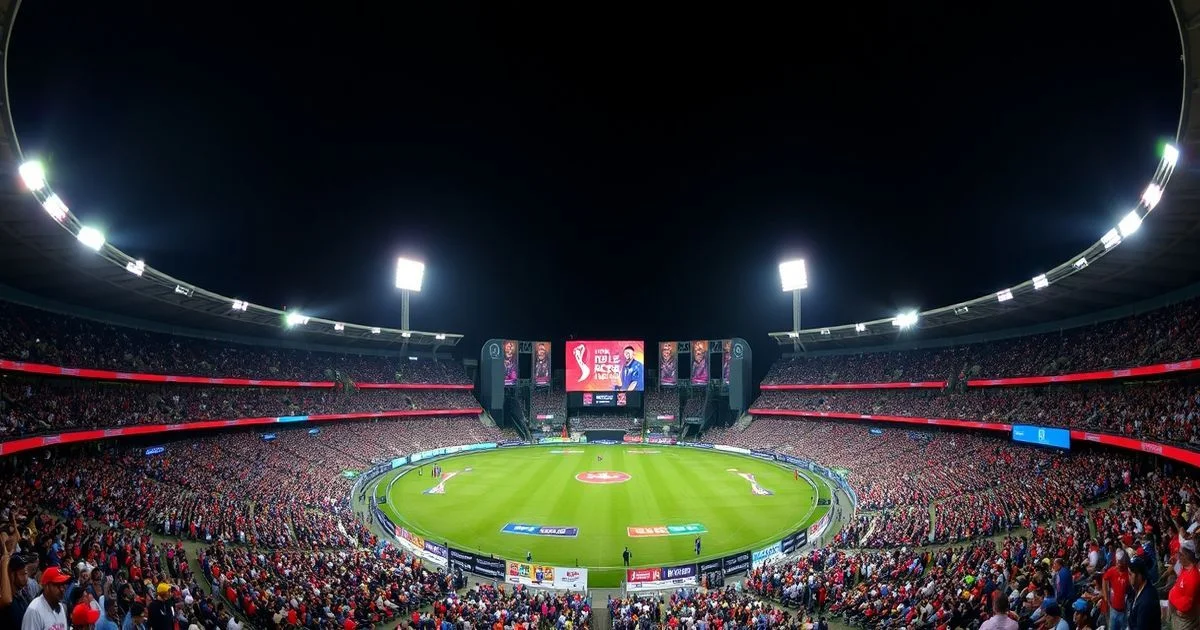
The IPL 2026 season, which recently saw the exciting opener between RCB and SRH as reported, marks a significant turning point in Arjun Tendulkar's career. After spending five seasons with the Mumbai Indians, the franchise synonymous with his father's legacy, Arjun was traded to the Lucknow Super Giants (LSG). This move represents a fresh start, an opportunity to step out of the shadows and forge his own identity in a new environment. He was acquired by LSG at his base price of INR 30 lakh, signalling a renewed hope for substantial playing time and a chance to prove his mettle.
However, the path ahead for Arjun at LSG is not without its challenges, as highlighted by prominent cricket voices. Former India off-spinner R Ashwin, known for his candid assessments, offered a rather blunt prediction regarding Arjun's playing prospects for IPL 2026. Ashwin remarked, "Arjun Tendulkar khelega hi nahi (Arjun Tendulkar won't play at all), and let's not even go there. I think it is very difficult because there are Mayank Yadav, Mohsin Khan, Avesh Khan, and Mohammad Shami in this lineup. There are so many fast bowlers. How will he play? I don't think he makes any case unless and until there are a lot of injuries." This expert opinion underscores the intense competition for spots in the highly competitive IPL and the formidable pace attack already present within the LSG squad. Ashwin's comments, while direct, reflect a realistic view of team dynamics and the challenge of breaking into an established playing XI.
Adding another personal dimension to this new professional chapter, Arjun Tendulkar recently tied the knot with Saaniya Chandhok on March 5, 2026. This significant life event occurred just weeks before the start of the IPL season, adding a layer of personal joy and stability as he embarks on this professional transition. Despite his wedding, he quickly returned to the field, playing a T20 match just one day after the celebrations, demonstrating his commitment to the sport. The combination of a new team, heightened expectations, and a recent personal milestone makes the IPL 2026 season particularly pivotal for Arjun, testing his resilience and talent in equal measure. This new environment offers both immense opportunity and significant hurdles, making his journey with LSG one to watch closely.
Beyond the Bat: Old-School Values and Modern Challenges
Arjun Tendulkar's approach to the game extends beyond his recent viral reply, revealing a blend of traditional values and modern adaptations. A noteworthy aspect that recently caught the attention of many, including LSG captain Rishabh Pant, is Arjun's preference for an unusually heavy bat. He reportedly uses a bat weighing around 1220 grams and avoids going below 1200 grams, a rarity in contemporary T20 cricket, which often favors lighter bats for quicker swing speeds. This old-school preference is a direct influence from his father, Sachin Tendulkar, who famously wielded some of the heaviest bats in international cricket, often in the 1310-1315 gram range.
Arjun’s reasoning for this choice is rooted in a philosophy of timing over brute force, explaining that with a heavier bat, even minimal contact can generate substantial power. This echoes Sachin's own approach, who evolved his technique and bat design to maximize control and power without excessive swing, rather than reducing bat weight over time. Rishabh Pant, known for his aggressive and modern batting style, was reportedly surprised by Arjun's choice but seemed genuinely impressed by the clarity and conviction behind it. This glimpse into Arjun's cricketing ideology highlights a deep respect for classic techniques and a thoughtful consideration of his equipment, suggesting a player who meticulously studies the nuances of his craft.
However, modern cricket also presents challenges that go beyond bat weight and technique. The professional landscape demands not just skill, but also adaptability, mental toughness, and the ability to handle relentless scrutiny. Arjun’s decision to move to LSG, despite the strong competition for places, showcases his willingness to embrace new challenges and prove himself outside the comfort of his home franchise. His multifaceted game, offering left-arm seam bowling and lower-order hitting potential, provides tactical flexibility that LSG might explore. Yet, the blend of his traditional approach and the cut-throat demands of modern T20 cricket will be a defining aspect of his journey, requiring continuous evolution and unwavering self-belief.
Social Media's Unforgiving Glare
Social media platforms have become an integral, yet often unforgiving, part of a modern athlete's life. For cricketers, particularly those in a cricket-obsessed nation like India, every action, statement, or even a subtle gesture can be amplified, scrutinized, and dissected by millions. This hyper-connectivity provides an unprecedented level of fan engagement but also exposes players to constant judgment, praise, and criticism. Arjun Tendulkar, like many young athletes, navigates this complex digital landscape, where opinions can turn volatile in an instant.
The viral nature of his recent reply, "I don't fear criticism," is a prime example of how quickly a statement can traverse the globe, sparking debate and discussion. While his words garnered significant appreciation for their frankness, they also opened the door to further examination of his performances and career trajectory. Social media users, armed with statistics and personal opinions, often engage in intense debates, sometimes crossing the line from constructive criticism to personal attacks. The anonymity offered by these platforms can embolden individuals to express harsh judgments, creating a challenging environment for public figures.
This constant online pressure can have significant psychological impacts on athletes, leading to stress, anxiety, and performance issues. Arjun's public declaration can be interpreted as a coping mechanism, a way to mentally distance himself from the noise and focus on his craft. The trend of players being trolled for various reasons, from selection to on-field performance, underscores the need for greater awareness and responsibility from both fans and platforms. While social media offers a direct channel for athletes to connect with their audience and build their brand, it also requires an almost impenetrable mental shield to withstand the relentless and often brutal glare of public opinion.
Expert Analysis: Decoding Arjun's Stance
Arjun Tendulkar's firm stance on criticism has resonated deeply within the cricketing fraternity, prompting various experts and former players to weigh in on his approach. Many view his declaration as a sign of maturity and a refreshing departure from the often-guarded responses typical of athletes under intense public scrutiny. Seasoned commentators emphasize the psychological fortitude required to openly declare indifference to criticism, especially when born into such a prominent cricketing lineage. They suggest that such a mindset is crucial for survival and success in a high-pressure environment like professional cricket, a sentiment echoed when considering the deep psychology of fan loyalty in professional team sports. Experts often highlight the immense burden of being "Sachin Tendulkar's son," a label that automatically sets an impossibly high bar.
By stating he doesn't fear criticism, Arjun is, in essence, trying to assert his individuality and define his own journey, rather than constantly striving to emulate an unmatched legacy. This act of self-preservation is deemed essential by sports psychologists who work with athletes facing similar pressures. They argue that internalizing external negativity can be detrimental to performance and overall well-being, making Arjun's defensive mechanism a healthy coping strategy.
Some analysts also draw parallels between Arjun's attitude and the mental toughness displayed by other successful athletes who have faced significant public pressure early in their careers. They point out that a certain level of detachment from public opinion allows players to focus on skill development and game strategy without being derailed by every tweet or media headline. While some might interpret his statement as defiant, the prevailing expert opinion leans towards seeing it as a necessary step for a young player seeking to establish his own identity and build a resilient mental framework essential for a long and successful career in the demanding world of professional sport.
The Broader Impact on Young Cricketers
The ripple effect of Arjun Tendulkar's viral reply extends far beyond his personal journey, holding significant implications for young cricketers navigating the modern sporting landscape. His candidness in addressing criticism and his decision to maintain a distinct personal life outside of cricket offer valuable lessons and a potential blueprint for others facing similar challenges, much like the debates sparked by a viral NCAA coach rant. In an era where social media amplifies both praise and condemnation, developing a robust mental framework is paramount for emerging talents.
For young players, especially those with family connections to famous athletes, the pressure to perform and live up to expectations can be overwhelming. Arjun's example demonstrates that it is possible to acknowledge the external noise without allowing it to dictate one's self-worth or career trajectory. His focus on his own practice and adherence to team plans, as he expressed after his maiden IPL wicket, signifies a commitment to the process over the outcome, a mindset crucial for sustained success. This resilience in the face of constant comparison and expectation provides a powerful role model for others striving to make their mark.
Furthermore, Arjun’s choice to foster friendships outside of cricket speaks to a broader need for balance and perspective. It underlines the importance of having a support system that offers an escape from the relentless demands of professional sport, providing an environment where one is valued simply for who they are, not just for their cricketing prowess. This approach can help young athletes maintain mental well-being and prevent burnout. Ultimately, Arjun Tendulkar's viral reply and his broader stance serve as a poignant reminder that while talent is essential, mental strength, self-awareness, and a clear sense of identity are equally critical ingredients for thriving in the hyper-competitive and intensely scrutinized world of professional cricket.
Conclusion
The recent candid revelations from Arjun Tendulkar have undoubtedly sent ripples through the cricketing world, establishing a narrative that goes beyond mere on-field performance. His courageous statement, "I don't fear criticism," coupled with his preference for a social circle outside cricket, encapsulates a new generation's approach to pressure and public scrutiny. This bold and independent spirit has cemented Arjun Tendulkar's Viral Reply Shakes Cricket World as a pivotal moment, forcing a broader conversation about mental resilience, identity, and the relentless demands placed upon athletes, particularly those with revered legacies.
As he embarks on a new chapter with the Lucknow Super Giants in IPL 2026, navigating both new team dynamics and the ever-present weight of expectation, Arjun's journey will be closely watched. His commitment to traditional cricketing values, exemplified by his heavy bat preference, combined with his modern approach to managing external pressures, paints a picture of a thoughtful and determined athlete. Ultimately, Arjun Tendulkar is not just another cricketer; he represents a new paradigm of sportsmanship, where mental strength and personal authenticity are as vital as skill on the field. His message resonates as a powerful reminder for all young aspirants: success in the spotlight requires not just talent, but also an unyielding belief in oneself and an unwavering commitment to one's own path, regardless of the noise.
Frequently Asked Questions
Q: Why did Arjun Tendulkar's recent reply go viral?
A: His candid declaration, "I don't fear criticism," resonated widely across social media and news outlets. It sparked discussions about mental fortitude, public scrutiny, and individuality in professional sports, distinguishing his approach from many peers.
Q: What challenges does Arjun Tendulkar face as Sachin Tendulkar's son?
A: He faces immense pressure, constant comparisons to his legendary father, and relentless public and media scrutiny. This often includes online trolling and questioning of his selection based on merit rather than his surname, creating a challenging environment.
Q: How does Arjun Tendulkar's move to Lucknow Super Giants impact his career?
A: The trade offers him a fresh start and an opportunity to step out of the shadow of his father's legacy at Mumbai Indians. It signals renewed hope for substantial playing time and a chance to prove his individual talent in a new, competitive environment.