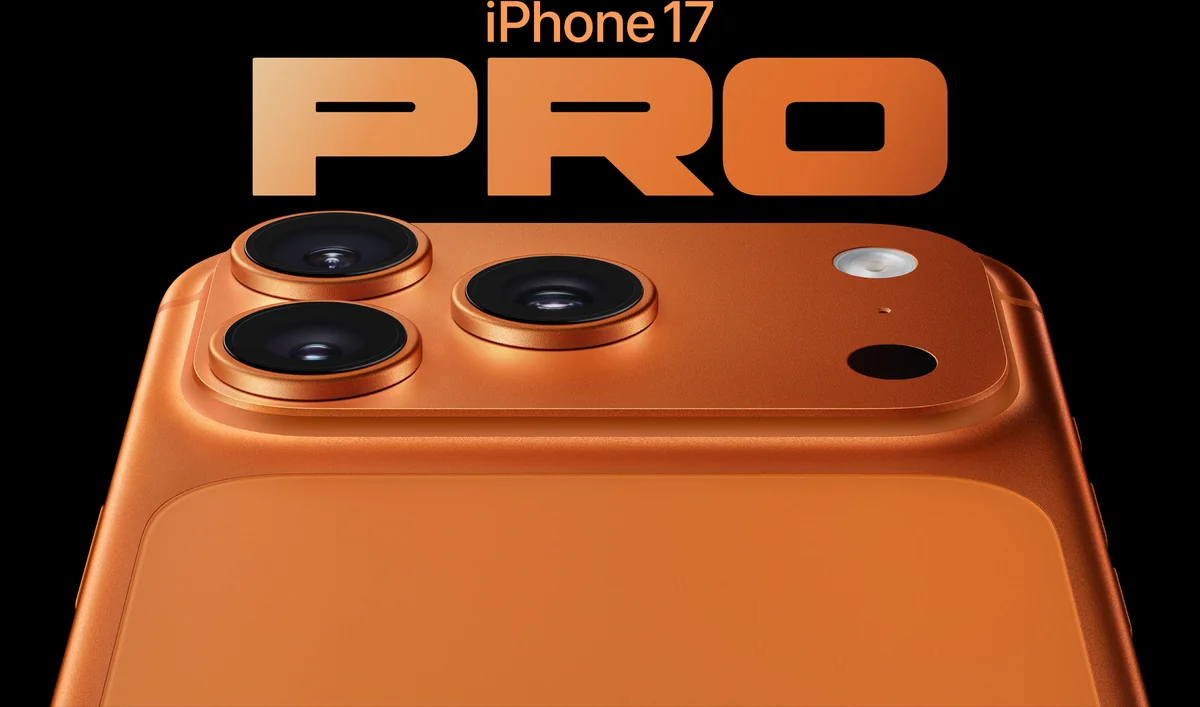
The relentless march of technological innovation ensures that the smartphone landscape is in a constant state of evolution. Each year, Apple, a titan in the industry, introduces a new iteration of its iconic iPhone, pushing boundaries and setting new benchmarks. As we look towards the horizon, the anticipated apple iphone 17 pro is poised to redefine expectations, bringing a suite of advancements that will undoubtedly shape the future of mobile computing. This comprehensive explainer will delve into the projected features, underlying technologies, and potential real-world implications of Apple's forthcoming flagship.
- What Is the Apple iPhone 17 Pro?
- How It Works: The Engine Behind the Innovation
- Key Components and Features of the Apple iPhone 17 Pro
- Real-World Applications of the Apple iPhone 17 Pro
- Pros and Cons of the Apple iPhone 17 Pro
- Future Outlook for the Apple iPhone 17 Pro
- Conclusion
- Frequently Asked Questions
- Further Reading & Resources
What Is the Apple iPhone 17 Pro?
The apple iphone 17 pro represents the pinnacle of Apple's smartphone engineering for its generation, typically unveiled as a premium offering alongside its standard counterparts. Historically, the "Pro" moniker signifies enhanced capabilities, particularly in areas like camera technology, display quality, and raw processing power, catering to users who demand the absolute best performance from their mobile device. The iPhone 17 Pro, in line with Apple's consistent annual release cycle, would likely have been introduced in September 2025, following the iPhone 16 series, which debuted in September 2024. This device is expected to integrate cutting-edge components and software optimizations that work in concert to deliver an unparalleled user experience, extending beyond mere incremental upgrades.
Understanding what the iPhone 17 Pro embodies requires appreciating Apple's philosophy: a seamless integration of hardware and software. It's not just a collection of powerful components; it's a meticulously engineered ecosystem designed to perform harmoniously. This synergistic approach allows Apple to extract maximum efficiency and performance, often surpassing competitors with seemingly superior raw specifications. The "Pro" designation also implies a focus on professional-grade applications, from advanced photography and videography to demanding computational tasks, making it a powerful tool for creators and power users alike.
How It Works: The Engine Behind the Innovation
At its core, the apple iphone 17 pro operates on an intricate interplay of custom-designed silicon, a sophisticated operating system, and a network of advanced sensors. This triumvirate forms the backbone of its functionality, allowing for everything from lightning-fast app execution to sophisticated AI-driven experiences.
The heart of the iPhone 17 Pro is its system-on-a-chip (SoC), anticipated to be the A19 Pro Bionic, or a similar generation of Apple's custom silicon. This processor, likely manufactured on an advanced process node such as 2nm, represents a significant leap in efficiency and power. Much like the central nervous system of the human body, the A19 Pro Bionic orchestrates every operation, from processing touch inputs to rendering complex graphics and executing machine learning models. This next-generation chip is designed not just for raw speed but for "edge" AI processing, meaning it can run complex artificial intelligence algorithms directly on the device, rather than relying solely on cloud-based computation. This on-device AI offers numerous advantages, including faster responses, enhanced data security, and a more seamless integration of AI into daily tasks. The rapid advancements in this field are setting the stage for what many are calling the next generation of AI intelligence, deeply integrated into our daily devices.
Complementing the powerful hardware is iOS, Apple's mobile operating system, which would have evolved to iOS 19 or iOS 20 by the time of the iPhone 17 Pro's release. This operating system is the user's window into the device's capabilities, providing an intuitive interface and a robust platform for applications. Crucially, iOS works in tandem with the A-series chip to optimize performance and battery life. Features like intelligent power management, advanced memory allocation, and streamlined background processes ensure that the device remains responsive and efficient throughout the day. The tight integration between hardware and software is a hallmark of Apple's design, leading to superior performance compared to many Android counterparts, even those with higher core counts or clock speeds.
Furthermore, a sophisticated array of sensors — including accelerometers, gyroscopes, magnetometers, barometers, ambient light sensors, and proximity sensors — continuously feed data to the A19 Pro chip. These sensors enable the iPhone 17 Pro to understand its environment and the user's context, facilitating features like automatic screen rotation, precise location tracking, and health monitoring. The LiDAR scanner, a staple in Pro models since the iPhone 12 Pro, plays an increasingly vital role. By emitting laser pulses and measuring the time it takes for them to return, LiDAR creates highly accurate 3D depth maps of the surroundings. This technology enhances augmented reality experiences, improves autofocus in low-light photography, and enables precise measurement applications. The advancements in mobile LiDAR scanning have increased its accuracy, resolution, and integration with AI and machine learning, making it a cornerstone for various industries.
Key Components and Features of the Apple iPhone 17 Pro
The apple iphone 17 pro is a mosaic of advanced technologies, each meticulously crafted to deliver a premium user experience. From its stunning display to its revolutionary camera system and robust connectivity, every component plays a crucial role.
Revolutionary Display Technology
The display is arguably the most interactive component of any smartphone, and the iPhone 17 Pro is expected to push the boundaries of visual fidelity. Building upon Apple's renowned Retina XDR displays, the iPhone 17 Pro will likely feature an even more advanced ProMotion XDR panel. This could involve a next-generation OLED technology or even early implementations of microLED, though widespread microLED adoption for smartphones is generally predicted for the 2030s. Regardless of the underlying panel technology, expect significantly higher peak brightness levels, allowing for exceptional outdoor visibility, and an even wider dynamic range for HDR content.
The ProMotion technology, already delivering adaptive refresh rates up to 120Hz, could see further refinements, potentially offering a broader dynamic range from as low as 1Hz for always-on display features to ultra-smooth 144Hz or even higher for demanding gaming and scrolling. Furthermore, predictions include thinner bezels and possibly an under-display front camera and Face ID system, leading to an uninterrupted, full-screen experience. This design evolution would maximize screen real estate, immersing users further in their content.
Advanced Computational Photography and Camera System
Apple's Pro iPhones are synonymous with exceptional camera performance, and the iPhone 17 Pro is expected to continue this legacy with substantial upgrades. The camera system will likely move beyond raw megapixel counts, focusing instead on larger, more intelligent sensors and deeper AI integration. We could see a multi-camera array with all sensors potentially boasting higher megapixel counts, such as 48MP for the main, ultra-wide, and telephoto lenses, as seen in some predictions for the iPhone 17 Pro Max. The main camera sensor could be a larger 1-inch type, or an equally advanced sensor like Sony's new 50MP sensor (Type 1 over 1.7 sensor with 5.12 MP resolution and 2.9 µm pixel pitch) designed for next-gen flagships, capturing significantly more light for improved low-light performance and dynamic range.
The telephoto lens is expected to feature an enhanced periscope design, offering significantly greater optical zoom capabilities—perhaps up to 10x lossless magnification, rivaling professional cameras. Computational photography will reach new heights, leveraging the A19 Pro Bionic's neural engine for advanced image processing. Features like improved AI Night Mode, real-time scene detection, and sophisticated post-capture editing will become even more powerful, delivering DSLR-like quality in a handheld form. Expect enhancements in spatial video capture for Apple Vision Pro, and potentially new features like advanced generative AI for photo manipulation, transforming simple sketches into high-quality visuals, and creating narrative videos from text descriptions. This leap in AI reasoning is becoming a cornerstone of modern mobile computing.
Next-Generation Performance with A19 Pro Bionic
The A19 Pro Bionic chip is the powerhouse enabling all of the iPhone 17 Pro's advanced features. Built on the most cutting-edge manufacturing process available (potentially 2nm), this chip will deliver unprecedented speeds and efficiency. It will feature an enhanced Neural Engine, specifically designed to accelerate machine learning tasks. This means faster on-device AI processing for everything from voice recognition and image analysis to predictive text and complex AR applications.
The CPU and GPU cores will see significant performance boosts, ensuring silky-smooth multitasking, incredibly realistic graphics for mobile gaming, and rapid processing of demanding video editing tasks. The A19 Pro Bionic will likely introduce new memory architectures to support the increased demands of AI and high-resolution media, ensuring that the device can handle intense workloads without breaking a sweat. Its architecture will be "AI-native," meaning it's designed from the ground up to handle AI algorithms efficiently, allowing for faster responses and improved security by keeping data processing on the device.
Enduring Power with Advanced Battery Technology
Battery life remains a critical concern for smartphone users, and the iPhone 17 Pro is expected to feature significant advancements in this area. While dramatic breakthroughs like widespread solid-state batteries in smartphones are still a few years out (though some prototypes exist and promise multi-day battery life and faster charging), the iPhone 17 Pro will likely incorporate refined lithium-ion technology with increased energy density and improved efficiency.
Expect larger battery capacities alongside software optimizations provided by the A19 Pro Bionic and iOS to extend usage times. Faster charging capabilities, both wired and wireless, will also be a priority, potentially leveraging enhanced MagSafe technology and faster USB-C Power Delivery, perhaps even supporting the high power delivery of Thunderbolt 5. The trend towards larger batteries is already evident in some upcoming smartphones.
Connectivity: Faster Than Ever Before
The iPhone 17 Pro will be at the forefront of wireless connectivity. It is highly anticipated to feature Wi-Fi 7 (802.11be), offering significantly faster speeds, lower latency, and improved capacity compared to Wi-Fi 6E. Wi-Fi 7 is expected to become the new standard, boosting speed by over four times that of the best available Wi-Fi connection. This will enable quicker downloads, smoother streaming of high-resolution content, and more reliable connections in crowded environments.
For cellular connectivity, the iPhone 17 Pro will support advanced 5G networks, likely incorporating new sub-6GHz and mmWave bands for broader coverage and even higher theoretical speeds. Enhancements to satellite connectivity for emergency services and potentially even basic messaging in remote areas are also expected, building upon existing capabilities. The shift to USB-C, already implemented in previous iPhone generations, will likely evolve to support Thunderbolt 5, providing blistering data transfer speeds of up to 80Gbps and 240W power delivery. This would be a boon for professionals who frequently transfer large files to external drives or connect to high-resolution external displays.
iOS Integration with Apple Intelligence
The software experience on the iPhone 17 Pro will be deeply integrated with Apple Intelligence, Apple's suite of AI features. This will manifest across various applications and system functions, making the device more intuitive and personalized. Apple Intelligence includes advanced writing tools for summarization, proofreading, and tone adjustment, visual intelligence features for understanding on-screen content, real-time translation, and an enhanced Siri. Siri, powered by advanced AI models, is expected to become a super-smart personal assistant, remembering context, taking actions across apps, and offering a full chatbot experience. Users can expect features like generating Genmojis, creating "Memory Movies" from photos and videos, and advanced image editing tools such as Image Wand and Clean Up. These AI capabilities will run efficiently thanks to the A19 Pro Bionic chip's dedicated Neural Engine and on-device processing, ensuring privacy and speed.
Real-World Applications of the Apple iPhone 17 Pro
The technological prowess of the apple iphone 17 pro translates directly into tangible benefits across a multitude of real-world scenarios. For the tech-savvy audience, these are not just theoretical advancements but tools that augment productivity, creativity, and daily life.
Consider the professional photographer or videographer. The advanced camera system, with its larger sensors, enhanced computational photography, and potentially greater optical zoom, means they can capture stunning, professional-grade content without lugging around bulky DSLR equipment. Imagine shooting a cinematic 8K video in challenging low-light conditions, with the iPhone 17 Pro's AI automatically optimizing exposure, focus, and stabilization. This transforms the smartphone from a casual camera into a legitimate production tool.
For augmented reality (AR) enthusiasts and developers, the improved LiDAR scanner and the A19 Pro Bionic's potent processing capabilities unlock new frontiers. From highly realistic AR gaming that seamlessly blends digital objects with the physical world to professional applications like precise indoor mapping, architectural visualization, and even remote assistance for technicians, the iPhone 17 Pro becomes a powerful portal to immersive digital experiences. The increased accuracy and resolution of mobile LiDAR, coupled with AI integration, will allow for more compelling and practical AR applications than ever before.
In the realm of personal productivity, the enhanced Apple Intelligence features will be a game-changer. Imagine dictating complex emails and having the system automatically refine the tone, summarize lengthy documents, or even draft intelligent replies based on context from your messages. Siri's deepened understanding and cross-app capabilities mean users can accomplish multi-step tasks with simple voice commands, from organizing schedules to manipulating data across different applications. This transforms the device into a proactive personal assistant, anticipating needs and streamlining workflows.
Connectivity enhancements also have profound implications. With Wi-Fi 7 and advanced 5G, professionals can upload massive files to cloud storage or participate in high-bandwidth video conferences from virtually anywhere with minimal latency. Thunderbolt 5 via the USB-C port further empowers creators, allowing for rapid transfer of 8K video footage to external SSDs or connection to multiple high-resolution external monitors for a desktop-like workstation on the go. This level of connectivity blurs the lines between mobile and desktop computing, offering unprecedented flexibility.
Pros and Cons of the Apple iPhone 17 Pro
Like any highly advanced piece of technology, the apple iphone 17 pro will come with its own set of advantages and potential drawbacks. Understanding these helps in setting realistic expectations.
Pros:
- Unparalleled Performance: The A19 Pro Bionic chip is expected to deliver industry-leading speed and efficiency, especially for AI and graphically intensive tasks.
- Revolutionary Camera System: With advanced sensors, computational photography, and enhanced optical zoom, it promises professional-grade image and video capture capabilities.
- Immersive Display: Next-generation OLED or microLED technology, combined with ProMotion advancements, will offer stunning visuals, higher brightness, and ultra-smooth refresh rates.
- Advanced AI Integration: Deep integration of Apple Intelligence throughout iOS will provide a more intuitive, personalized, and efficient user experience with features like smart writing tools and an evolved Siri.
- Superior Connectivity: Wi-Fi 7, advanced 5G, and Thunderbolt 5 support will ensure blazing-fast data transfer, lower latency, and robust network performance.
- Enhanced Augmented Reality: Improved LiDAR technology and processing power will enable more realistic and practical AR applications.
- Premium Build Quality: Apple's Pro models typically feature durable, high-quality materials, likely continuing the use of titanium.
Cons:
- High Price Point: As a flagship "Pro" model, the iPhone 17 Pro will undoubtedly command a premium price, potentially making it inaccessible to a broad segment of consumers.
- Potential Overkill for Average Users: Many of the advanced features, particularly in photography, video, and raw processing power, might be underutilized by the average smartphone user, making the standard iPhone 17 a more cost-effective choice.
- Battery Life Expectations: While improved, the demand from high-refresh-rate displays, powerful processors, and constant connectivity means users will still need to manage battery usage, and multi-day battery life (without solid-state battery tech) might remain elusive.
- Ecosystem Lock-in: While an advantage for existing Apple users, the proprietary nature of iOS and certain Apple services can make it challenging for users accustomed to other ecosystems to transition.
- Incremental Design Changes: While internals see significant upgrades, Apple often maintains a similar aesthetic for several generations, which some users might perceive as lacking innovation in external design.
- Limited Repairability: Apple devices are often noted for their complex internal designs, which can make third-party repairs difficult and costly.
Future Outlook for the Apple iPhone 17 Pro
The apple iphone 17 pro is not just a device for today; it's a testament to Apple's vision for the future of personal technology. Its capabilities will undoubtedly influence subsequent generations of smartphones across the industry. Looking forward, we can anticipate several trends to emerge or accelerate based on the foundation laid by the iPhone 17 Pro.
One significant area is the deepening integration of artificial intelligence. While the iPhone 17 Pro will heavily feature on-device AI with Apple Intelligence, future iterations will likely push this further. We could see AI agents becoming even more proactive, managing complex tasks across multiple applications with minimal user intervention, essentially transforming the phone into an intelligent copilot for daily life, a vision often discussed at major events such as the AI Summit 2026 India. This raises fascinating questions about privacy and control in an increasingly intelligent ecosystem.
Display technology will continue its rapid evolution. While microLED in smartphones is projected for the 2030s, the advancements made for the iPhone 17 Pro could pave the way for intermediate steps, such as more efficient tandem OLED panels or even brighter, more resilient display materials. True all-screen designs with invisible under-display cameras and Face ID modules will become the norm, eliminating notches and punch-holes entirely.
Camera technology will also continue its trajectory, moving beyond megapixel counts towards even more sophisticated computational photography and potentially novel sensor technologies. We might see liquid lenses for instantaneous focus and variable apertures across all lenses, offering unprecedented photographic flexibility. The integration of advanced computational photography with AI will make professional-grade imaging even more accessible and automated, allowing users to achieve stunning results with minimal effort.
Battery technology remains a holy grail, and while solid-state batteries are still maturing for mass smartphone adoption, the continued research and development spurred by devices like the iPhone 17 Pro will bring us closer. When widely implemented, solid-state technology promises dramatically longer battery life, faster charging, and improved safety.
Finally, the iPhone 17 Pro's robust connectivity, particularly Thunderbolt 5 and Wi-Fi 7, signals a future where smartphones are seamlessly integrated into a broader digital ecosystem. They will increasingly serve as central hubs for high-bandwidth data, connecting effortlessly to augmented and virtual reality devices, external displays, and powerful peripherals. This will blur the lines between traditional device categories, making the smartphone an even more versatile and indispensable tool in our interconnected lives.
Conclusion
The apple iphone 17 pro stands as a beacon of innovation, embodying Apple's commitment to pushing the boundaries of mobile technology. From its anticipated A19 Pro Bionic chip and groundbreaking camera system to its immersive display and deeply integrated Apple Intelligence, this device promises to deliver a user experience that is both powerful and intuitive. While commanding a premium, its advanced features cater to a tech-savvy audience seeking depth over fluff, offering tools that enhance creativity, productivity, and connectivity in profound ways. As we look ahead, the iPhone 17 Pro is more than just a smartphone; it's a glimpse into the future of personal computing, setting the stage for subsequent generations and continuing to shape the digital world around us.
Frequently Asked Questions
Q: When is the Apple iPhone 17 Pro expected to be released?
A: Based on Apple's consistent annual release cycle, the iPhone 17 Pro would logically debut in September 2025, following the iPhone 16 series. However, specific dates are only confirmed by Apple closer to the actual event.
Q: What significant camera advancements are expected in the iPhone 17 Pro?
A: The iPhone 17 Pro is anticipated to feature larger, more intelligent sensors, potentially a 1-inch type for the main camera, and an enhanced periscope telephoto lens for greater optical zoom (e.g., up to 10x). Deep integration of computational photography and AI will further enhance low-light performance, dynamic range, and generative photo manipulation.
Q: How will Apple Intelligence enhance the user experience on the iPhone 17 Pro?
A: Apple Intelligence will deeply integrate AI across iOS, offering advanced writing tools for summarization and tone adjustment, visual intelligence for on-screen content understanding, and an enhanced Siri. This makes the device a more intuitive, personalized, and efficient personal assistant, handling complex tasks and offering a full chatbot experience.
Further Reading & Resources
- Apple Newsroom: https://www.apple.com/newsroom/
- Wikipedia - iPhone: https://en.wikipedia.org/wiki/IPhone
- The Verge - Mobile Tech: https://www.theverge.com/tech
- TSMC Technology: https://www.tsmc.com/english/dedicatedFoundry/technology/logic
- Qualcomm - Wi-Fi 7 Explained: https://www.qualcomm.com/news/onq/2023/11/wi-fi-7-what-it-is-and-why-it-matters