Airport Chaos: TSA Pay Dispute Escalates Amid Travel Rush
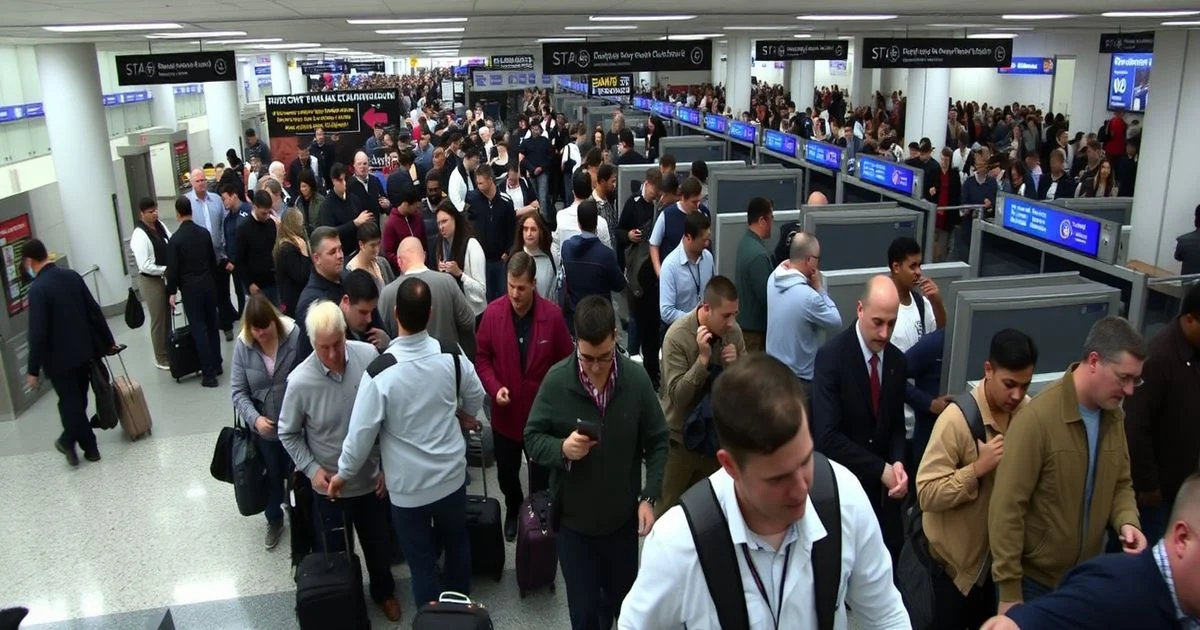
The nation is grappling with airport chaos as a critical TSA pay dispute escalates just as the busy travel rush begins, threatening widespread disruptions across U.S. airports. Across the United States, travelers are bracing for unprecedented disruptions as the ongoing pay dispute involving the Transportation Security Administration (TSA) workforce intensifies. The escalating tensions over compensation for essential security officers are threatening to plunge U.S. airports into widespread chaos, particularly as spring break travel peaks. This critical situation highlights deep-seated issues within the agency, impacting millions of passengers and raising significant national security concerns.
- The Current State of Affairs: Widespread Disruptions and Airport Chaos
- Background to the Dispute: A History of Pay Issues and Union Tensions
- Deeper Dive into Key Details
- Expert Opinion and Agency Warnings
- Impact on Travelers and the Economy
- What's Next? Navigating the Airport Chaos: TSA Pay Dispute Escalates
- Frequently Asked Questions
- Further Reading & Resources
The Current State of Affairs: Widespread Disruptions and Airport Chaos
As of late March 2026, airports nationwide are grappling with significant operational challenges stemming from a prolonged Department of Homeland Security (DHS) funding standoff. TSA officers, deemed essential federal employees, have been mandated to work without pay for weeks, leading to a dramatic increase in unscheduled absences. These absences have translated into agonizingly long security lines, missed flights, and a palpable sense of frustration among travelers. Some airports have reported wait times extending to four or five hours, with major hubs like Houston's George Bush Intercontinental Airport and Hartsfield-Jackson Atlanta International Airport experiencing some of the worst delays. The visible reduction in active screening lanes is a direct consequence of the airport chaos: TSA pay dispute escalates.
The Transportation Security Administration's acting administrator, Ha Nguyen McNeill, testified before a House committee, revealing the dire circumstances. By late March, TSA employees were on track to miss an estimated $1 billion in paychecks as a result of the closures. McNeill highlighted that the national absence rate for TSA officers had surged from a typical 4% to as high as 40-50% at some critical airports. This severe staffing shortfall is forcing managers to consolidate checkpoints and reduce screening lanes, exacerbating wait times even further. The domino effect is clear: fewer officers mean longer lines, leading to traveler frustration and potential security vulnerabilities, all stemming from the unresolved pay dispute.
Background to the Dispute: A History of Pay Issues and Union Tensions
The current crisis is not an isolated incident but rather the culmination of longstanding issues regarding TSA officer compensation and labor rights. Since its inception following the September 11, 2001, terrorist attacks, the TSA initially operated with broad discretion over its personnel system, often denying its workforce full collective bargaining rights. For years, TSA pay scales lagged behind those of other federal employees, leading to persistent morale problems and high attrition rates.
In an effort to address these concerns, TSA granted abridged collective bargaining rights in 2011, which were expanded in 2022. A new pay scale, more akin to the federal government's General Schedule (GS) pay system, was also implemented, with annual service pay increases and a clearer career path for Transportation Security Officers (TSOs). However, these improvements have been challenged by recent political maneuvers.
In late 2025 and early 2026, the Department of Homeland Security (DHS) announced intentions to terminate existing collective bargaining agreements and revert to a more restrictive labor framework, claiming it was necessary to prioritize national security and improve resource allocation. This move, perceived by unions as an "unprovoked attack" and an attempt to dismantle union protections, has fueled significant legal challenges and exacerbated the current dispute. The American Federation of Government Employees (AFGE), representing approximately 47,000 TSA officers, has vowed to fight these actions, calling them retaliatory and a direct affront to the stability of the essential workforce. This ongoing tension underscores the deeply entrenched nature of the compensation and rights issues at the heart of the current airport disruptions.
Deeper Dive into Key Details
Financial Strain on TSA Officers
TSA officers are federal employees responsible for a critical national security mission, yet many often live paycheck to paycheck. The starting salary for a Band D TSO, equivalent to a GS-5, is around $34,454, with average salaries ranging from approximately $46,000–$55,000 with locality adjustments. However, when faced with working without pay during a government funding lapse, the financial burden becomes immense. Many officers have reported difficulties covering basic expenses like rent, bills, groceries, and childcare, leading to severe psychological distress. Local communities and charities have stepped in to provide food banks and temporary financial assistance, highlighting the desperation of these essential workers. The uncertainty surrounding their next paycheck adds an immense mental load, impacting their focus and well-being.
Ha Nguyen McNeill vividly described the personal toll during her testimony, stating that "many in our workforce have missed bill payments, received eviction notices, had their cars repossessed and utilities shut off, lost their childcare, defaulted on loans, damaged their credit line, and drained their retirement savings." Some have resorted to sleeping in their cars, selling blood and plasma, or taking on second jobs to make ends meet. This severe financial stress directly impacts morale and job performance, creating a ripple effect that compromises security efficacy at the nation's airports.
Staffing Shortages and Retention Crisis
The lack of consistent pay has led to a significant exodus of experienced personnel. Over 300 officers quit during a previous shutdown, and nearly 500 more resigned since the partial shutdown began in mid-February 2026. This contributes to a broader staffing shortfall within the agency, which already struggles with recruitment due to the demanding nature of the job, stressful environment, and historically lower pay compared to counterparts in other federal law enforcement agencies. The cumulative effect of high attrition and recruitment difficulties means that airports are increasingly reliant on less experienced staff or overtime from an already stretched workforce.
Replacing these officers is a lengthy process, requiring four to six months of extensive training before new hires can work independently at checkpoints. This means that even if the pay dispute is resolved immediately, the effects of current resignations will be felt for months, potentially impacting future peak travel periods like the upcoming FIFA World Cup in June 2026, which is expected to bring unprecedented numbers of international visitors. The loss of institutional knowledge and seasoned judgment is a severe concern for maintaining the highest levels of security.
Expert Opinion and Agency Warnings
Aviation experts and TSA leadership have issued stark warnings about the potential consequences of the escalating pay dispute. Sheldon H. Jacobson, an aviation expert, noted that while air travel continues, the efficiency and service are significantly impacted. He emphasized that if the shutdown drags on, and officers continue to call in sick at higher rates, strains on the air system will intensify, leading to a breakdown in the orderly flow of passengers and cargo.
Ha Nguyen McNeill has described the situation as a "dire situation" and a "potential perfect storm of severe staffing shortages and an influx of millions of passengers" for upcoming major events. She explicitly stated that the agency is being forced to consolidate lanes and might even have to close smaller airports if staffing levels become untenable. Johnny Jones, a leader of a labor union representing TSA officers, also indicated that a list of about 75 airports that could face closures or reassignments to support larger hubs has been compiled, a prospect that would cripple regional air travel and local economies.
The Department of Homeland Security, in its contingency plan, mandates that approximately 95% of TSA workers are essential and must continue working. However, this classification comes with the caveat that they work without pay during funding impasses, a situation that critics argue is unsustainable and fundamentally unfair, bordering on coercive labor practices.
Impact on Travelers and the Economy
The most immediate and visible impact of the TSA pay dispute is on the traveling public. Long lines and delays are not merely an inconvenience; they lead to missed flights, disrupted travel plans, and significant economic repercussions. The U.S. Travel Association, a major trade group, has warned that a government shutdown could cost the economy $1 billion a week in lost revenue from tourism and business travel. Such economic strains directly impact GDP and job creation, extending far beyond the aviation sector. For a deeper understanding of government spending and economic impacts, consider reading our article on Understanding the Fundamentals of Inflation and Macroeconomics.
When travelers miss flights due to TSA delays, airlines are typically not obligated to rebook them for free, as the delay is not considered the airline's fault. This leaves passengers to bear the financial burden of rebooking, purchasing new tickets, and additional expenses for accommodations or transportation. Furthermore, the ongoing disruptions can severely damage the reputation of U.S. air travel on an international scale, potentially deterring foreign visitors and impacting long-term tourism trends. Beyond the direct travel impact, the financial stress on TSA officers raises serious concerns about potential security vulnerabilities. Fatigue, distraction, and declining morale, resulting from prolonged work without pay, increase the risk of errors, undermining the core mission of safeguarding transportation systems against threats.
What's Next? Navigating the Airport Chaos: TSA Pay Dispute Escalates
The path forward for resolving the Airport Chaos: TSA Pay Dispute Escalates remains uncertain. While recent reports indicate President Trump ordered Homeland Security to begin paying TSA workers from existing funds, the source and sustainability of this funding remain unclear without a full congressional appropriation for DHS. This temporary measure, while offering immediate relief, merely kicks the can down the road, as it does not address the underlying systemic issues of compensation equity or the ongoing dispute over collective bargaining rights. For more context on the political dynamics surrounding such executive orders, explore articles like Trump Eyes Iran's Kharg Island: A New Geopolitical Flashpoint.
Congressional action is crucial to providing a stable, long-term solution. Lawmakers face immense pressure to pass comprehensive funding legislation for DHS to ensure TSA officers receive consistent pay and to prevent further degradation of the air travel system. The looming FIFA World Cup in June adds significant urgency to these efforts, as the U.S. anticipates a massive influx of international travelers that will further strain already precarious airport operations. The political gridlock, often characterized by partisan disagreements over budget priorities, makes a swift and permanent resolution challenging.
Meanwhile, passengers are advised to prepare for potential delays. Tools like the My TSA app can help monitor wait times, and arriving at the airport significantly earlier than usual is highly recommended. Documenting arrival times and any airport alerts can also be helpful in case of missed flights, though recourse remains limited. The fundamental challenge remains ensuring that the dedicated men and women who secure our skies are fairly compensated and supported, allowing them to focus on their vital mission without the constant burden of financial instability and the threat of future government shutdowns impacting their livelihoods. Only through robust legislative action and a commitment to fair labor practices can the nation hope to restore stability and security to its airports.
Frequently Asked Questions
Q: Why are TSA agents experiencing pay disputes?
A: TSA agents, classified as essential federal employees, have been working without consistent pay due to ongoing government funding standoffs and disputes over collective bargaining rights. The Department of Homeland Security's efforts to alter existing labor agreements have further exacerbated these tensions, leading to widespread dissatisfaction and absenteeism.
Q: How do TSA pay disputes affect travelers?
A: The disputes lead to significant staffing shortages at security checkpoints, causing dramatically longer wait times, increased risk of missed flights, and general operational disruptions across airports nationwide. This creates frustration for passengers and can lead to additional travel expenses and economic losses.
Q: What solutions are being pursued for the TSA pay dispute?
A: Temporary funding measures, such as using existing DHS funds by executive order, are being implemented to provide immediate relief. However, a sustainable, long-term solution requires comprehensive congressional action to pass appropriations for DHS and a resolution to the ongoing disagreements over TSA officers' collective bargaining rights and compensation structure.