The landscape of academic research is undergoing a profound transformation, driven by the relentless march of artificial intelligence. For researchers navigating the ever-expanding universe of scholarly information, the demand for efficiency, accuracy, and novel insights has never been greater. This is precisely where cutting-edge AI tools for research papers are stepping in, offering an unparalleled opportunity to streamline workflows, enhance discovery, and fundamentally alter how studies are conceptualized, executed, and disseminated. These intelligent systems are not just automation tools; they represent a significant leap towards more dynamic, interconnected, and productive scholarly endeavors, revolutionizing academic discovery across disciplines.
- What Are AI Tools for Research Papers?
- The Transformative Power of AI in Academia
- How AI Tools Revolutionize Each Stage of Research
- Key Features and Capabilities of Modern AI Tools for Research
- Real-World Applications and Case Studies
- Advantages and Challenges of Integrating AI in Research
- Future Outlook: The Evolving Landscape of AI in Academia
- Choosing the Right AI Tools for Your Research Papers
- Conclusion
- Frequently Asked Questions
- Further Reading & Resources
What Are AI Tools for Research Papers?
AI tools for research papers encompass a broad spectrum of software applications and platforms that leverage artificial intelligence, machine learning, and natural language processing (NLP) to assist academics and researchers at various stages of their work. Far from being a monolithic entity, this category includes everything from sophisticated search engines and literature review assistants to data analysis platforms, writing aids, and even tools designed to improve the peer-review process. Their core purpose is to augment human intelligence, handling the tedious, time-consuming, or computationally intensive tasks that often bog down the research cycle.
Historically, research has been a laborious, often manual process, particularly in the initial stages of literature review and data synthesis. The sheer volume of published papers, especially in rapidly evolving fields, makes it virtually impossible for any human to keep abreast of all relevant developments. AI tools address this challenge head-on by sifting through vast datasets, identifying patterns, extracting key information, and even generating summaries at speeds and scales unimaginable just a decade ago. They are designed to act as intelligent co-pilots, enhancing a researcher's capabilities rather than replacing them.
The Transformative Power of AI in Academia
The integration of AI into academic processes marks a significant paradigm shift, moving beyond simple automation to fundamentally reshape how knowledge is created, validated, and shared. This transformative power stems from AI's ability to process and synthesize information at a scale and speed that human researchers cannot match, leading to breakthroughs that might otherwise remain undiscovered. The traditional research pipeline, often linear and sequential, is becoming more iterative and dynamic with AI's assistance, allowing for rapid hypothesis testing and data exploration.
For instance, the ability of AI to identify subtle correlations in large, complex datasets can accelerate discovery in fields like medicine, materials science, and environmental studies. In the humanities, AI can analyze vast textual corpora to uncover linguistic patterns, historical trends, or thematic connections that would take a human scholar years to meticulously trace. This isn't merely about saving time; it's about unlocking new avenues of inquiry and enabling researchers to ask more complex, data-driven questions. The implications extend to fostering interdisciplinary collaboration, as AI can bridge knowledge gaps between disparate fields by highlighting shared concepts or methodologies.
Beyond Simple Automation: A Paradigm Shift
The impact of AI tools on research extends far beyond merely automating repetitive tasks. They represent a fundamental shift in the epistemological framework of research itself. Instead of researchers meticulously crafting search queries and manually sifting through results, AI can proactively suggest relevant literature, identify emerging topics, and even generate preliminary hypotheses based on existing knowledge. This frees up cognitive resources, allowing researchers to dedicate more time to critical thinking, experimental design, and interpretive analysis—tasks that remain uniquely human.
Moreover, AI can help mitigate human biases inherent in research. By processing information objectively and identifying patterns without preconceived notions, these tools can offer fresh perspectives or challenge established dogmas. This is particularly crucial in fields where confirmation bias might inadvertently skew interpretation. The paradigm shift is also evident in the democratizing effect of AI; advanced analytical capabilities, once the exclusive domain of well-funded institutions with extensive resources, are becoming more accessible to individual researchers and smaller academic setups. This levels the playing field, fostering a more inclusive research environment globally. For a broader perspective on how AI supports academic endeavors, explore 55 Free AI Tools for Students: Elevate Your Academic Journey.
How AI Tools Revolutionize Each Stage of Research
The utility of AI in academia spans the entire research lifecycle, from the genesis of an idea to the final stages of publication and dissemination. Each phase benefits from specialized AI applications that enhance efficiency, accuracy, and the depth of inquiry.
Literature Review and Discovery
Perhaps one of the most immediate and impactful applications of AI is in the domain of literature review. Traditional methods can be incredibly time-consuming, requiring researchers to manually sift through hundreds, if not thousands, of papers to identify relevant studies, key findings, and knowledge gaps. AI tools transform this process into a highly efficient and insightful endeavor.
AI-powered literature review tools leverage natural language processing (NLP) to understand the semantic content of academic papers, rather than just keyword matching. They can:
- Identify relevant papers: By analyzing abstracts, introductions, and conclusions, AI can pinpoint studies directly pertinent to a researcher's query, even if they don't use the exact keywords. Tools like Semantic Scholar use AI to understand the meaning and connections within scientific papers, going beyond basic keyword matching. Elicit, an AI research assistant, allows users to search through over 125 million academic papers using semantic understanding, grasping the meaning behind research questions to find relevant studies even when terminology differs.
- Extract key information: These tools can automatically extract methods, results, conclusions, and even specific data points from papers, presenting them in a structured, digestible format. Elicit, for example, automates the extraction of key insights and organizes data efficiently, allowing users to focus on analysis and synthesis. It can extract metadata such as publication dates, study types, and the number of participants, and allows users to export findings as a CSV file for organization.
- Map research landscapes: By analyzing citation networks and thematic connections, AI can generate visual maps of a research field, highlighting influential papers, emerging trends, and areas ripe for further investigation. Semantic Scholar provides a citation graph that allows users to explore connections between papers, classifying citations by intent and identifying "Highly Influential" citations.
- Identify knowledge gaps: By synthesizing existing research, AI can flag areas where further investigation is needed or where conflicting results exist, guiding researchers towards novel contributions.
This significantly accelerates the initial phase of research, allowing academics to build a comprehensive understanding of their topic much faster and with greater precision.
Data Collection and Analysis
Once a research question is established, data collection and analysis often follow. This stage, particularly in quantitative research, can be computationally intensive and demand sophisticated analytical skills. AI tools are proving invaluable here, especially with the rise of big data.
- Automated data extraction: AI can automate the extraction of data from various sources, including unstructured text, images, and sensor data. In medical research, AI-powered image recognition can analyze thousands of pathology slides or MRI scans for specific markers, far exceeding human capacity and speed.
- Advanced statistical analysis: While traditional statistical software remains crucial, AI integrates advanced machine learning algorithms to uncover complex patterns, correlations, and anomalies in datasets that might be missed by conventional methods. This includes predictive modeling, clustering, and classification tasks that can reveal deeper insights. Some common AI packages can even be used to analyze and produce spreadsheets, run complex calculations, and perform statistical analysis.
- Natural Language Processing (NLP) for qualitative data: For qualitative researchers, NLP tools can analyze large volumes of textual data (interviews, surveys, social media content) to identify themes, sentiments, and linguistic patterns, streamlining the coding and interpretation process.
- Data visualization: AI can assist in generating insightful and complex data visualizations, automatically suggesting appropriate chart types and highlighting key trends, making complex data more accessible and understandable.
In essence, AI acts as a sophisticated "data-mining expert," not just processing numbers but understanding their context and potential implications, allowing researchers to derive more meaningful conclusions from their data.
Writing and Drafting
The actual writing of a research paper—from drafting the introduction to refining the conclusion—is a demanding task that requires clarity, precision, and adherence to academic conventions. AI tools are emerging as powerful allies in this phase, acting as intelligent co-authors and editors.
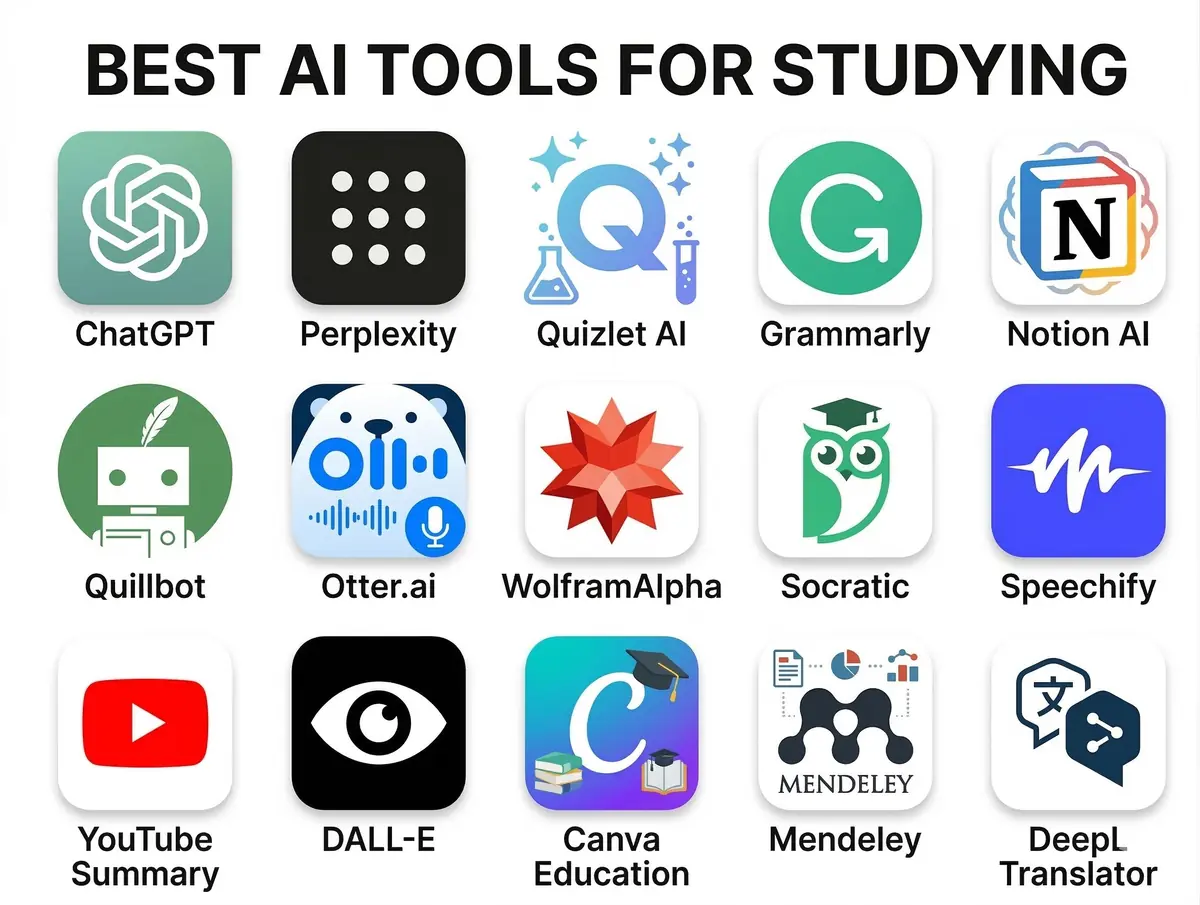
- Grammar and style correction: Beyond basic spell-checkers, AI-powered writing assistants like Grammarly, often incorporating advanced AI features, can identify complex grammatical errors, suggest stylistic improvements for academic tone, and even detect plagiarism. Grammarly helps students and educators improve the quality of academic papers, enhancing writing quality and ensuring grammatical accuracy.
- Paraphrasing and summarization: Tools like QuillBot and other AI writing assistants can rephrase sentences and paragraphs to improve clarity, avoid redundancy, and help researchers articulate complex ideas more effectively. QuillBot's AI summarizer distills lengthy texts into concise summaries, capturing essential points without losing context. It also provides paraphrasing capabilities to ensure originality.
- Content generation (with caution): Large Language Models (LLMs) like ChatGPT and Gemini can assist in drafting outlines, generating initial paragraphs, or brainstorming ideas. While not suitable for producing entire sections without significant human oversight and fact-checking, they can overcome writer's block and provide a starting point for various sections of a paper, such as methodology descriptions or discussion points. It's crucial, however, to ensure that any AI-generated text is thoroughly reviewed, fact-checked, and properly attributed or acknowledged, adhering to ethical guidelines set by institutions and publishers. Discover more helpful resources in our guide on Best AI tools for studying in 2026.
- Citation integration: Some advanced reference managers are beginning to integrate AI to suggest citations based on the context of the writing, ensuring comprehensive and accurate referencing. Grammarly, for example, offers citation features that automatically pull citations from the browser.
The role of AI here is akin to a vigilant co-editor, meticulously reviewing text for errors, suggesting improvements, and even helping to shape the narrative, all while upholding the researcher's original voice and intent.
Citation and Referencing
Managing citations and bibliographies is a notoriously meticulous and often frustrating aspect of academic writing. Even minor errors can lead to delays in publication or misattribution. AI tools are streamlining this crucial step, minimizing human error.
- Automated citation generation: While tools like Zotero and Mendeley have long automated citation generation, AI enhancements are making them even smarter. AI can help in automatically identifying the correct citation style based on the target journal or institution. Grammarly also generates fully formatted citations in seconds.
- Reference checking and validation: AI can cross-reference the citations in a manuscript against online databases to ensure accuracy, identify missing DOIs, or flag inconsistencies. This capability ensures that every reference points to the correct source, bolstering the paper's credibility.
- Contextual citation suggestions: Some experimental tools are exploring AI's ability to suggest relevant papers that might be missing from a researcher's bibliography, based on the semantic content of their draft. This ensures a more comprehensive and robust literature engagement.
By automating and validating the citation process, AI significantly reduces the administrative burden on researchers, allowing them to focus on the intellectual content of their work.
Peer Review and Dissemination
The final stages of the research cycle involve peer review and, eventually, dissemination. AI is beginning to play a role in optimizing these processes, addressing issues like reviewer fatigue and publication delays.
- Reviewer matching: AI algorithms can analyze the content of a submitted manuscript and the publication history/expertise of potential reviewers to suggest the most appropriate matches. This can expedite the peer-review process by ensuring papers are sent to reviewers with relevant expertise, reducing the likelihood of inappropriate assignments and subsequent rejections.
- Plagiarism detection: Advanced AI-powered plagiarism checkers are more sophisticated than ever, capable of detecting not just direct copies but also subtle forms of paraphrasing and mosaic plagiarism, upholding academic integrity. Grammarly's plagiarism checker cross-references work against billions of web pages and academic databases. QuillBot also includes a plagiarism checker for premium users.
- Early trend identification: For journals and publishers, AI can analyze submission trends to identify emerging research areas, helping them commission special issues or proactively seek submissions in hot topics.
- Pre-publication checks: AI can perform automated checks for formatting, ethical declarations, and data availability statements, flagging potential issues before a manuscript even reaches human editors, thus streamlining the editorial workflow.
- Post-publication impact analysis: After publication, AI tools can track the impact of a paper, analyzing citations, mentions in social media, and news coverage to provide a comprehensive view of its reach and influence.
While human judgment remains paramount in peer review, AI offers powerful assistive capabilities, making the process more efficient, fairer, and robust. A survey of 1,600 academics across 111 countries found that over 50% of reviewers now use AI tools while peer-reviewing manuscripts. Many reviewers use AI for drafting reports or summarizing findings. However, there are also concerns about confidentiality and copyright issues when uploading entire manuscripts into AI chatbots for summarization.
Key Features and Capabilities of Modern AI Tools for Research
The sophistication of current AI tools for research papers stems from several core technological advancements. Understanding these underlying capabilities helps in appreciating the depth of their utility.
Natural Language Processing (NLP) at its Core
NLP is the bedrock of most AI tools designed for textual academic content. It enables machines to understand, interpret, and generate human language in a way that is both meaningful and contextually aware.
- Semantic understanding: Unlike older keyword-based search, modern NLP can grasp the meaning and intent behind words, allowing tools to find truly relevant information even if the exact terminology isn't used. Semantic Scholar, for instance, uses natural language processing to understand the meaning and connections within scientific papers.
- Named Entity Recognition (NER): This capability allows AI to identify and categorize key entities in text, such as author names, institutions, research methods, and specific scientific terms, making data extraction highly precise.
- Text summarization: Advanced NLP models can condense lengthy research papers or sections into concise summaries, retaining the core information and arguments. Semantic Scholar uses AI to produce concise, single-sentence summaries (TLDRs) of academic papers.
- Sentiment analysis: In qualitative research, NLP can analyze the emotional tone of text, identifying positive, negative, or neutral sentiments in survey responses or interview transcripts.
Machine Learning for Pattern Recognition
Machine learning (ML) algorithms are fundamental to the analytical power of AI research tools. They allow systems to learn from data, identify complex patterns, and make predictions or classifications without being explicitly programmed for every scenario.
- Classification: ML models can classify research papers by topic, methodology, or even potential impact, aiding in organization and discovery.
- Clustering: Unsupervised learning techniques can group similar papers or data points together, revealing hidden structures or thematic clusters within a large dataset.
- Predictive modeling: In data analysis, ML can build models to predict outcomes, forecast trends, or identify potential risks based on historical data. For example, predicting the likelihood of a drug candidate's success based on its chemical properties.
- Recommendation systems: Similar to e-commerce platforms, AI can recommend related research papers, authors, or journals based on a user's reading history or current project. Semantic Scholar offers personalized research feeds with paper recommendations based on saved library folders.
Semantic Search and Knowledge Graphs
Moving beyond traditional keyword-based searches, AI-powered tools leverage semantic search and knowledge graphs to provide more intelligent and contextual results.
- Semantic Search: This allows users to search for concepts and meanings rather than just keywords. A query like "causes of global warming" would return papers discussing greenhouse gases, industrial emissions, and deforestation, even if the phrase "causes of global warming" isn't explicitly present in every document. Elicit's semantic search capability identifies relevant studies based on the contextual meaning of a query, not just exact keyword matches.
- Knowledge Graphs: These are structured representations of knowledge that define relationships between entities. In academia, a knowledge graph might connect authors, papers, institutions, research topics, and even funding sources. The Open Research Knowledge Graph (ORKG) is an open infrastructure for representing and exploring scientific knowledge in a structured and machine-readable form, capturing key contributions of publications and organizing them in a knowledge graph. This allows scientific knowledge to be searched, compared, and reused in new ways.
Predictive Analytics for Research Trends
AI's ability to analyze vast amounts of historical data—including publication rates, funding allocations, and citation patterns—allows for powerful predictive analytics.
- Emerging trend detection: AI can identify subtle shifts in research focus, predicting which areas are likely to become prominent in the near future. This helps researchers position their work strategically and allows funding bodies to allocate resources effectively.
- Grant success prediction: Some experimental models use AI to analyze past grant applications and outcomes to identify factors associated with successful funding, potentially offering guidance to applicants.
- Impact forecasting: AI can estimate the potential impact of a research paper or project based on its novelty, methodology, and relevance to current discourse, assisting researchers in targeting high-impact journals.
Real-World Applications and Case Studies
The practical application of AI tools is becoming increasingly visible across various academic disciplines, leading to tangible benefits and accelerating discovery.
In medicine and health sciences, AI-powered platforms are dramatically speeding up drug discovery by analyzing molecular structures and predicting drug efficacy. Researchers are using AI to sift through millions of patient records to identify risk factors for diseases or to personalize treatment plans. For example, tools like AlphaFold, developed by DeepMind, predict protein structures with unprecedented accuracy, revolutionizing structural biology and drug design. AlphaFold has predicted over 200 million protein structures, nearly all cataloged proteins known to science. This has potentially saved millions of dollars and hundreds of millions of years in research time.
In the social sciences, AI is being used to analyze vast datasets of public opinion, social media discourse, and historical texts. Researchers can deploy NLP tools to gauge public sentiment towards political policies across different demographics or to uncover long-term societal trends from archival news articles. Large language models (LLMs) can even simulate human subjects to test assumptions, run pilot studies, and estimate optimal sample sizes, providing an inexpensive way to test social theories.
For engineering and materials science, AI assists in simulating experiments, designing new materials with specific properties, and optimizing manufacturing processes. Machine learning models can predict the performance of new alloys or composites before they are even synthesized, saving immense experimental costs and time.
Even in the humanities, AI is finding its niche. Digital humanities scholars use AI for stylometric analysis of literary works, identifying authorship, or tracing the evolution of language over centuries. AI applications in humanities research significantly impact multi-model and multi-dimensional information sharing and the representation of knowledge, enabling reflection on historical trends, culture, and identity. The convergence of AI and Digital Humanities is considered a key moment for academic research and cultural preservation, transforming the scale and nature of questions that can be asked about human history, art, and literature.
Advantages and Challenges of Integrating AI in Research
While the promise of AI in research is immense, a balanced perspective requires acknowledging both its significant advantages and the inherent challenges.
Pros: Enhanced Efficiency, Accuracy, and Novelty
The benefits of integrating AI into research workflows are compelling:
- Unprecedented Efficiency: AI significantly reduces the time spent on repetitive and data-intensive tasks such as literature review, data cleaning, and citation management. Elicit claims to save researchers up to 5 hours per week and reduce systematic review time by 80% without compromising accuracy.
- Increased Accuracy and Objectivity: By processing data systematically and without human biases, AI can identify patterns and draw conclusions with a higher degree of accuracy in certain tasks. Elicit, for example, demonstrated a 99.4% data extraction accuracy rate in a systematic review.
- Discovery of Novel Insights: AI's ability to analyze vast, complex datasets can uncover correlations, anomalies, and insights that human researchers might overlook. This leads to the formulation of new hypotheses and the discovery of novel phenomena.
- Enhanced Reproducibility: AI tools can facilitate more standardized and transparent research processes, potentially improving the reproducibility of studies, particularly in data analysis and methodology reporting.
- Interdisciplinary Connections: AI can identify conceptual links and shared methodologies between disparate fields, fostering new interdisciplinary collaborations and breakthroughs.
Cons: Ethical Concerns, Bias, and Over-reliance
Despite the advantages, integrating AI into research presents several challenges that must be carefully addressed:
- Ethical Concerns and Bias: AI models are trained on existing data, which often reflects societal biases. If this data is skewed or incomplete, the AI's outputs can perpetuate or even amplify these biases, leading to unfair or inaccurate conclusions, particularly in fields like medicine or social policy. The "black box" nature of some advanced AI models also raises concerns about transparency and explainability.
- Data Privacy and Security: Research often involves sensitive data. Utilizing AI tools, especially cloud-based ones, requires robust safeguards to ensure data privacy and compliance with regulations like GDPR or HIPAA.
- Over-reliance and Deskilling: An over-reliance on AI tools without critical oversight can lead to a "deskilling" of researchers, where fundamental analytical and critical thinking abilities diminish. Researchers must remain proficient in the underlying methodologies to critically evaluate AI-generated outputs.
- Cost and Accessibility: Advanced AI tools and computational resources can be expensive, creating a potential divide between well-funded institutions and those with limited resources.
- Validation and Trustworthiness: The output of AI, whether it's a generated summary or a data analysis, still requires rigorous human validation. ChatGPT, for instance, can generate content based on patterns it has been trained on but lacks the ability to produce new knowledge or original research findings. It may produce inaccurate or outdated information and fabricate citations. Researchers must understand the limitations of the AI and verify its outputs to maintain academic rigor.
- Intellectual Property and Authorship: The use of AI in generating text or ideas raises complex questions about intellectual property, authorship, and academic integrity. Academic assignments and published manuscripts require the author to be fully responsible for the content, and AI cannot take responsibility.
Navigating these challenges requires a commitment to ethical AI development, robust regulatory frameworks, and continuous education for researchers on how to effectively and responsibly integrate AI into their work.
Future Outlook: The Evolving Landscape of AI in Academia
The trajectory of AI in academia is one of continuous evolution and increasing sophistication. We are likely to see several key trends shaping its future impact.
One significant development will be the emergence of more specialized and domain-specific AI models. While general-purpose LLMs are powerful, future AI tools will be fine-tuned on specific academic corpora, allowing for even greater accuracy and contextual understanding within niche fields like astrophysics, ancient history, or immunology. This specialization will lead to AI assistants that are not just intelligent but also profoundly knowledgeable in their respective domains.
Collaborative AI will also become more prevalent. Imagine AI systems that can seamlessly integrate across different stages of research, from suggesting relevant grants based on a research proposal to automatically generating figures from analyzed data and even helping to draft press releases for published work. These integrated ecosystems will create a more fluid and less fragmented research experience.
The focus on ethical AI and explainable AI (XAI) will intensify. As AI becomes more deeply embedded in critical research decisions, the demand for transparency in how AI arrives at its conclusions will grow. Researchers will need tools that not only provide answers but also explain their reasoning, allowing for better human oversight and trust. This will involve new methodologies for auditing AI systems for bias and ensuring fairness in their outputs.
Furthermore, AI's role in predictive modeling for grants and impact analysis will mature. Institutions and funding bodies may use AI to identify promising research proposals or forecast the societal impact of scientific discoveries with greater accuracy. This could optimize resource allocation and accelerate the translation of research into real-world applications.
The concept of "AI as a Service" (AIaaS) for research will also expand, making sophisticated AI capabilities accessible to a broader global research community, regardless of their institutional resources. This democratization of advanced research tools holds the potential to unlock innovation in previously underserved regions and research areas.
Ultimately, the future of AI in academia envisions a partnership between human ingenuity and artificial intelligence, where AI acts as a catalyst, amplifying human capabilities, accelerating discovery, and pushing the boundaries of knowledge in unprecedented ways. To stay informed about broader advancements, see our article on Latest AI Technologies: Shaping Our Future & Beyond.
Choosing the Right AI Tools for Your Research Papers
With a rapidly expanding array of AI tools available, selecting the most appropriate ones for your research can seem daunting. A strategic approach involves considering your specific needs, the nature of your research, and practical constraints.
- Identify Your Research Bottlenecks: Pinpoint the stages of your research process where you face the most significant challenges. Is it sifting through vast literature? Analyzing complex data? Or struggling with writing clarity? Tools are often specialized, so knowing your pain points helps narrow down options.
- Understand Tool Specialization:
- For literature review and discovery, look for tools like Elicit or Semantic Scholar, which excel at semantic search, summarization, and knowledge mapping.
- For data analysis, consider specialized AI/ML platforms relevant to your data type (e.g., image analysis AI, NLP for text data, or advanced statistical AI for quantitative data).
- For writing and editing, Grammarly or QuillBot can be invaluable. General-purpose LLMs like Gemini (with careful oversight) can also assist in drafting.
- For citation management, traditional tools like Zotero or Mendeley are solid, with some offering nascent AI features for validation, and Grammarly can generate citations.
- Assess Integration and Workflow Compatibility: Will the new tool seamlessly integrate with your existing software (e.g., reference managers, word processors, statistical packages)? A fragmented workflow can negate the efficiency gains.
- Evaluate Data Security and Privacy: For sensitive research data, prioritize tools that offer robust data encryption, clear privacy policies, and compliance with relevant data protection regulations. Self-hosted or on-premises solutions might be preferable for highly confidential work.
- Consider Cost and Accessibility: Many AI tools offer free tiers or academic discounts. Weigh the subscription costs against the potential efficiency gains and your budget. Elicit, for example, offers a free basic plan with unlimited paper searches and summaries.
- Test and Experiment: Most tools offer trials. Take advantage of these to test a few options with your actual research data to see which ones best fit your working style and deliver the most value. Don't be afraid to experiment with multiple tools for different tasks.
- Stay Updated: The AI landscape is dynamic. Regularly check for new tools, updates, and reviews from the academic community to ensure you're using the most effective solutions.
By adopting a thoughtful and evaluative approach, researchers can effectively leverage AI to enhance their work, making their research more efficient, insightful, and impactful.
Conclusion
The integration of AI tools for research papers is not merely an optional enhancement but a foundational shift that is redefining the very fabric of academic inquiry. From accelerating literature reviews and refining data analysis to assisting with writing and streamlining publication, AI is proving to be an indispensable partner for modern scholars. These intelligent systems empower researchers to navigate the complexities of information overload, uncover hidden patterns, and dedicate more cognitive resources to the core intellectual challenges of their fields.
While the ethical considerations and challenges associated with AI in research are real and warrant careful attention, the trajectory is clear: AI is set to continue its transformative journey, offering unprecedented opportunities for discovery and innovation. Embracing these tools responsibly, with a critical eye and an understanding of their limitations, will be key to unlocking their full potential. As AI continues to evolve, its symbiotic relationship with human intelligence will undoubtedly lead to a new era of research—one that is faster, more accurate, more interconnected, and ultimately, more impactful for the advancement of human knowledge.
Frequently Asked Questions
Q: What are the most popular AI tools for literature review?
A: Popular AI tools for literature review include Elicit, Semantic Scholar, and Connected Papers. They leverage natural language processing (NLP) to efficiently identify relevant studies, extract key information, map research landscapes, and pinpoint knowledge gaps, significantly boosting research efficiency.
Q: Can AI tools write my entire research paper?
A: No, AI tools cannot write your entire research paper autonomously and responsibly. While they can assist with drafting outlines, generating initial paragraphs, and overcoming writer's block, human oversight, critical thinking, and rigorous fact-checking are absolutely essential for maintaining academic integrity and producing original scholarship.
Q: What are the main ethical concerns when using AI in research?
A: Main ethical concerns include the potential for AI models to amplify biases present in their training data, issues surrounding data privacy and security, the risk of over-reliance leading to a "deskilling" of researchers, and complex questions regarding intellectual property and proper authorship attribution for AI-generated content.