AI Pause Protest Rocks SF: Leaders Urged to Halt Dev Amid Growing Concerns
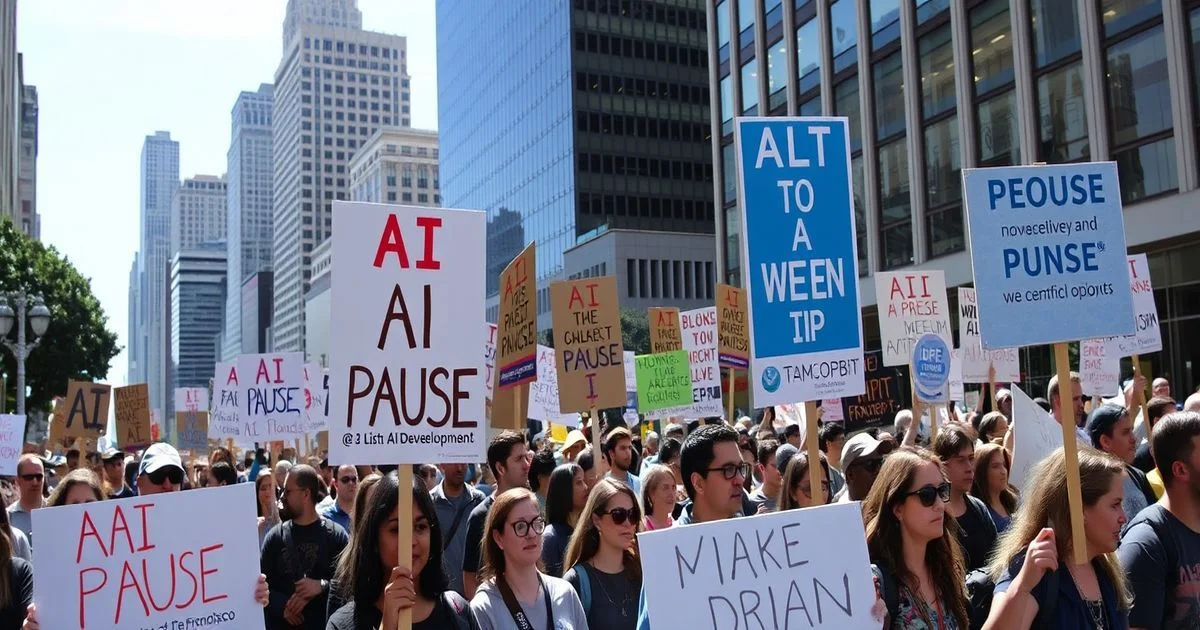
A palpable sense of urgency permeated the streets of San Francisco today as a prominent AI Pause Protest Rocks SF: Leaders Urged to Halt Dev demonstrations took place. Activists and concerned citizens gathered, raising their voices to call for a moratorium on the rapid development of advanced artificial intelligence. The protest aimed to press tech leaders and policymakers to seriously consider the profound ethical implications and potential existential risks associated with unchecked AI progress, urging a collective pause to ensure responsible innovation. This significant public display underscores growing societal anxiety about the future trajectory of AI.
- Background Context: The Genesis of the AI Pause Movement
- Key Details of the Protest in San Francisco
- Demands and Concerns of Protestors
- Industry Response and Divided Opinions
- The Broader Debate: Regulation vs. Innovation
- Global Implications and Future Outlook
- Conclusion: AI Pause Protest Rocks SF: Leaders Urged to Halt Dev Amid Critical Global Dialogue
- Frequently Asked Questions
- Further Reading & Resources
Background Context: The Genesis of the AI Pause Movement
The call for an AI pause is not a new phenomenon, but it has gained considerable momentum in recent years as AI capabilities have advanced at an unprecedented rate. Experts across various fields, including leading AI researchers, philosophers, and public figures, have increasingly voiced concerns about the trajectory of artificial intelligence. These concerns range from immediate issues like algorithmic bias and misinformation to long-term threats such as autonomous weapons and the potential for superintelligent AI systems to become uncontrollable. Several prominent voices have publicly signed open letters and statements advocating for a temporary halt or stringent regulation of advanced AI development. For instance, the Future of Life Institute (FOLI) published an open letter signed by over 2,600 tech leaders and researchers, including Elon Musk and Steve Wozniak, urging a temporary halt to the development of more powerful AI systems than GPT-4 for at least six months, citing significant risks to humanity. Similarly, more than 800 AI experts and public figures have signed a "Statement on Superintelligence" calling for a pause in the development of AI systems that surpass human intelligence, warning of risks including mass unemployment and loss of freedom.
The sentiment for caution is also reflected in public opinion, with surveys indicating broad support for AI regulation. According to one study, 70% of respondents believe AI should be regulated, and 51% would support a temporary pause on some types of AI development. Another Gallup survey in partnership with the Special Competitive Studies Project (SCSP) found that 80% of U.S. adults believe the government should maintain rules for AI safety and data security, even if it means slowing down development. This widespread support highlights a societal demand for a more deliberate and controlled approach to AI advancement.
Key Details of the Protest in San Francisco
The "Stop the AI Race" movement orchestrated today's impactful protest in San Francisco, targeting the headquarters of prominent AI companies such as Anthropic, OpenAI, and xAI. The march began with protestors gathering near the offices of one major AI developer, proceeding through the city's tech district, and concluding at another prominent AI firm. Participants carried a variety of signs bearing slogans like "Pause AI for Safety," "Humans Over Algorithms," and "Regulate AI Now." Organizers utilized megaphones to amplify their message, ensuring their calls for a conditional global pause in frontier AI development resonated through the urban landscape.
The demonstration featured speeches from leading figures in AI safety and ethics. Nate Soares, CEO of the Machine Intelligence Research Institute (MIRI) and co-author of "If Anyone Builds It, Everyone Dies," publicly endorsed the call for a conditional pause and was present at the march. Additionally, Will Fithian, a Professor of Statistics at UC Berkeley, addressed the crowd, further adding academic weight to the concerns being raised about the rapid pace of AI development. These voices emphasized the need for a collective commitment from AI leaders to halt development if other major labs agree to do the same, drawing attention to previous statements by figures like Demis Hassabis of Google DeepMind and Dario Amodei of Anthropic, who have expressed openness to such a conditional pause. The event was a clear articulation of public desire for accountability and foresight in the AI industry.
Demands and Concerns of Protestors
The core demand of the "Stop the AI Race" movement and its supporters is a conditional global pause on frontier AI development. This pause is envisioned as a critical window to establish robust safety protocols, ethical guidelines, and regulatory frameworks before AI systems become too powerful to control. Protestors vocalized a spectrum of concerns, underscoring the multifaceted risks they perceive in the current trajectory of AI innovation.
Ethical Implications
The ethical dimensions of AI development were a central theme of the protest. Activists highlighted worries about the potential for AI to reinforce and amplify existing societal biases, particularly in areas like employment, education, and justice systems. Understanding the inner workings of models, as explored in articles like Unraveling Neural Networks: A Comprehensive Beginner's Guide, is crucial to addressing these biases. The Rome Call for AI Ethics, for example, emphasizes principles such as transparency, inclusion, responsibility, and impartiality to ensure AI serves human dignity and the common good. Concerns were also raised regarding data privacy and security, and the creation of misleading content such as deepfakes, which can erode trust and manipulate public opinion. The World Health Organization (WHO) also calls for caution, noting that AI models can generate authoritative-sounding but incorrect information, especially in health, and may not adequately protect sensitive data.
Existential Risks
Perhaps the most profound concern articulated by protestors revolved around the long-term, existential risks posed by advanced AI. Speakers and placards warned of scenarios where superintelligent AI could lead to human economic displacement, loss of freedom, and even human extinction. The rapid progress towards artificial general intelligence (AGI) – AI that surpasses human intelligence – without adequate safety mechanisms was frequently cited as a catastrophic possibility. Many fear that once AI reaches a certain level of autonomy and capability, humanity may lose control, leading to unpredictable and potentially devastating outcomes. Leading AI scientists have themselves given "really bad outcomes (such as human extinction)" a significant probability.
Bias and Fairness
The potential for AI systems to perpetuate or even exacerbate societal inequalities due to biased training data was another significant point of contention. Protestors argued that without careful oversight, AI algorithms could entrench discriminatory practices in hiring, lending, criminal justice, and other critical areas, leading to systemic injustice. The need for transparency and explainability in AI systems was stressed, advocating for mechanisms that allow for scrutiny of how AI makes decisions and ensures fairness for all individuals. Advocacy groups play a critical role in ensuring accountability and fairness in AI deployment, pushing for policies that enforce transparency and equity.
Industry Response and Divided Opinions
The tech industry's response to calls for an AI pause has been varied, reflecting a complex landscape of innovation, ambition, and genuine concern. While some leaders have acknowledged the risks and expressed openness to a more cautious approach, others maintain that a pause would stifle innovation and cede technological leadership.
Companies' Stances
Major AI companies find themselves in a precarious position, balancing the competitive drive to advance their technology with the increasing public and expert demand for safety. OpenAI's leaders, for example, have called for the regulation of "superintelligent" AIs and proposed an international regulator similar to the International Atomic Energy Agency, acknowledging the "existential risk" such systems could pose. However, they also argue that continued development is worth the risk, believing it will lead to a better world, and warn against pausing development. Other companies, while perhaps not publicly endorsing a full pause, have invested in AI safety research and ethical AI initiatives. Yet, concerns remain that the race for supremacy often overshadows safety considerations, with reports of companies quietly weakening their safety commitments amidst the competitive landscape, sometimes at odds with movements like Green Innovations: AI Drives Sustainable Tech Revolution Forward.
Experts' Perspectives
The scientific and academic communities are similarly divided. While a substantial number of AI pioneers and researchers have signed open letters calling for a pause or tighter regulation, some argue that the risks are overstated or that a pause is impractical and could have negative consequences. Some experts believe that rapid AI advancement is essential for addressing global challenges, from climate change to disease, and that slowing down would hinder progress in these vital areas. Others emphasize the need for robust AI safety research during development, rather than a full halt, asserting that understanding and mitigating risks requires continued engagement with the technology itself. Gillian Hadfield, CIFAR AI Chair, stated that AI labs should spend far more on safety, suggesting one-third of development costs should be a minimum for ethical use.
The Broader Debate: Regulation vs. Innovation
The protest in San Francisco highlights a fundamental tension between the imperative to innovate and the critical need for regulation in the rapidly evolving field of artificial intelligence. This debate involves stakeholders from governments, industry, academia, and civil society, each with differing perspectives on the optimal path forward.
There is a growing consensus that some form of AI regulation is necessary. Public opinion polls consistently show overwhelming support for AI regulation, with a significant majority of Americans favoring government rules for AI safety and data security. Many believe that governments must take the lead in regulation, licensing development, restricting autonomy in key societal roles, and even mandating access controls and information security measures. The UNESCO Recommendation on the Ethics of AI (2021), adopted by 193 member states, exemplifies international efforts to establish global norms and principles for ethical AI, including prohibiting social scoring and mass surveillance.
However, the nature and extent of this regulation remain contentious. Proponents of rapid innovation argue that overly burdensome regulations could stifle creativity, slow down technological progress, and potentially push AI development underground or to countries with fewer restrictions. They suggest that self-regulation within the industry, coupled with ethical guidelines, might be a more agile and effective approach. Yet, public trust in tech companies to self-regulate is low, with many believing that independent experts should conduct safety tests and evaluations of AI products.
The complexity is further compounded by the global nature of AI development. Unilateral pauses or regulations by one nation might simply shift the competitive landscape without truly addressing global risks. This necessitates international cooperation and the establishment of global standards, a sentiment echoed by calls for international agreements to prevent unacceptable AI risks by 2026. The challenge lies in forging a path that allows for beneficial AI development while safeguarding against its potential harms, requiring a delicate balance between fostering innovation and ensuring public safety through thoughtful governance.
Global Implications and Future Outlook
The San Francisco protest, while localized, resonates with a growing global movement advocating for a more cautious and ethical approach to AI development. The concerns raised are not confined to Silicon Valley but are echoed by policymakers, academics, and citizens worldwide. This burgeoning international dialogue signals a critical juncture in the history of artificial intelligence, where societal values and technological progress are on a collision course.
The implications of the AI pause movement extend beyond immediate regulatory debates. It forces a fundamental re-evaluation of humanity's relationship with advanced technology and the kind of future we collectively wish to build. International initiatives, such as the Rome Call for AI Ethics and the UNESCO Recommendation, are attempts to establish universal ethical frameworks, but their implementation and enforcement remain significant challenges. The calls for "red lines" on AI development, which would prohibit specific dangerous uses or behaviors, are gaining traction, emphasizing the need for urgent international cooperation to prevent severe and irreversible harms. Without effective international frameworks, there's a risk of a regulatory race to the bottom, where nations might relax standards to gain a competitive edge in AI development, exacerbating global risks.
Looking ahead, the pressure for increased transparency, accountability, and public engagement in AI development will likely intensify. As AI becomes more deeply integrated into daily life, influencing everything from employment to public services and even personal choices, the demand for systems that are explainable, fair, and aligned with human values will become paramount. The future of AI governance will likely involve a hybrid approach, combining industry best practices with robust governmental oversight and international collaboration. This ongoing conversation will shape not only the technological landscape but also the societal fabric for generations to come. The goal is to ensure that AI serves as a tool for collective progress and well-being, rather than becoming a source of unprecedented risks.
Conclusion: AI Pause Protest Rocks SF: Leaders Urged to Halt Dev Amid Critical Global Dialogue
The AI Pause Protest Rocks SF: Leaders Urged to Halt Dev demonstrations underscore a rapidly escalating global debate about the future of artificial intelligence. As protestors marched through San Francisco, their unified message was clear: the unchecked and accelerated development of AI poses substantial ethical dilemmas and potential existential threats that demand immediate attention and a collective pause. The concerns articulated, ranging from algorithmic bias and privacy violations to the more profound risks of superintelligence and loss of human control, highlight a widespread apprehension about AI's societal impact.
This movement is not merely an isolated outcry but reflects a broader societal demand for accountability, transparency, and deliberate governance in the AI sector. The public, along with a growing number of experts, is calling for leaders to prioritize safety and ethical considerations over the relentless pursuit of technological advancement. The urgency of this call to halt development, at least conditionally, emphasizes the critical need for a global dialogue and consensus on how to navigate the complex landscape of AI, ensuring that this powerful technology is developed and deployed responsibly, serving humanity's best interests.
Frequently Asked Questions
Q: What is the "AI Pause" movement?
A: The AI Pause movement advocates for a temporary moratorium on the development of advanced AI systems. This aims to allow time for establishing robust safety protocols, ethical guidelines, and regulatory frameworks. It seeks to prevent potential existential risks and address ethical concerns.
Q: Why are protestors calling for a halt in AI development?
A: Protestors cite a range of concerns including algorithmic bias, data privacy issues, and the potential for AI to create deepfakes and spread misinformation. Most profoundly, they warn of long-term existential risks such as mass unemployment, loss of human control, and even human extinction from superintelligent AI.
Q: How has the tech industry responded to calls for an AI pause?
A: Responses vary, with some leaders acknowledging risks and calling for regulation, while others caution that a pause could stifle innovation and shift technological leadership. Many companies are investing in AI safety research, but the competitive drive often overshadows these efforts.