AI-Generated 'Mosquito Net' Photo Debunked as Fake News
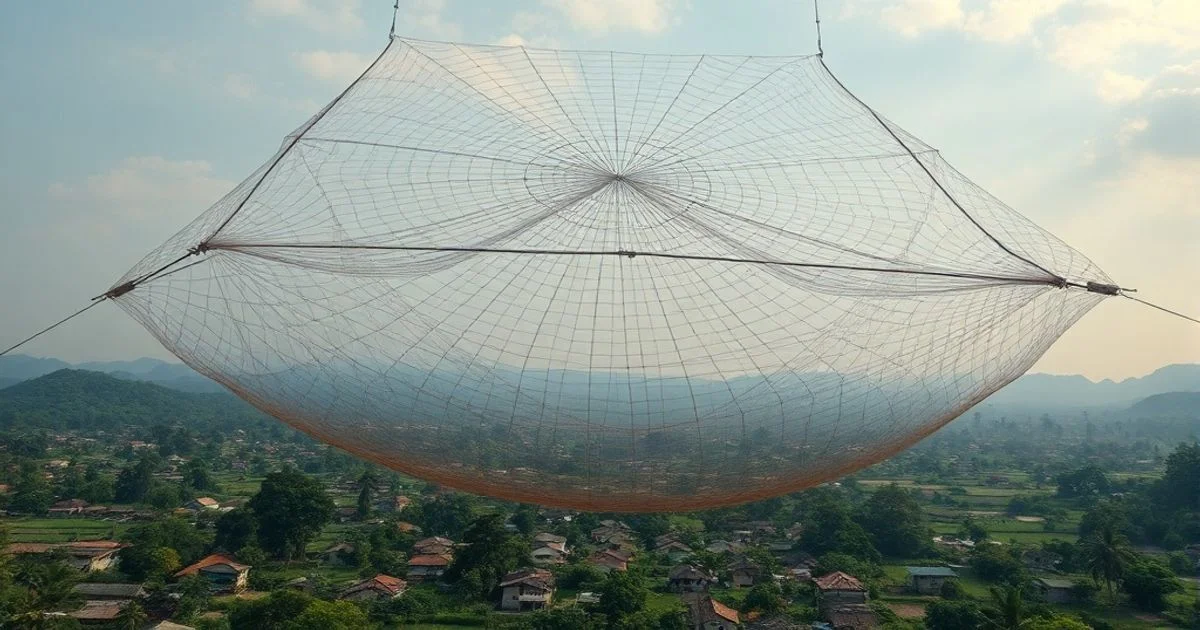
The pervasive spread of misinformation in the digital age has reached a new critical juncture with the recent confirmation that a widely shared image, purporting to show an innovative solution to mosquito control, is in fact an AI-Generated 'Mosquito Net' Photo Debunked as Fake News. This incident underscores the urgent need for heightened media literacy and critical analysis of visual content, particularly as artificial intelligence tools become increasingly sophisticated at creating hyper-realistic, yet entirely fabricated, images. The photo, which depicted an elaborate, seemingly practical, and highly unusual “mosquito net” covering a community, quickly garnered significant attention across social media platforms, sparking discussions about ingenuity, public health, and the future of disease prevention. Its rapid debunking highlights the vigilance required to navigate today's complex information landscape.
- The Rise of AI in Visual Content and the Challenge of Authenticity
- How the AI-Generated 'Mosquito Net' Photo Debunked as Fake News
- The Broader Implications of AI-Generated Misinformation
- Navigating the Digital Landscape: Protecting Against Fake News
- Conclusion
- Frequently Asked Questions
- Further Reading & Resources
The Rise of AI in Visual Content and the Challenge of Authenticity
The advent of advanced artificial intelligence, particularly in generative models capable of producing photorealistic images, has ushered in an era where distinguishing between genuine and fabricated visual content is becoming increasingly difficult. These sophisticated AI systems can conjure scenes, objects, and even people from mere text prompts, making them powerful tools for creativity, but also potent instruments for deception. The implications for news consumption, public discourse, and the very fabric of truth are profound, especially as major players like OpenAI continue to push boundaries and achieve massive valuations. Where once obvious visual cues might betray a manipulated image, today's AI-generated content often mimics reality with startling precision, presenting a significant challenge to traditional methods of fact-checking and verification.
The ability of AI to seamlessly blend imagination with perceived reality has amplified concerns among journalists, researchers, and the general public. As these tools become more accessible, the volume of synthetic media is expected to grow exponentially, placing a greater burden on individuals and institutions to develop robust strategies for identifying and combating misinformation. The "mosquito net" photo is but one prominent example, illustrating how quickly a convincing, albeit fabricated, narrative can take hold and influence public perception before its true nature is exposed.
The 'Mosquito Net' Image: A Case Study in Digital Deception
The image in question, which surfaced across various social media platforms, depicted an intricate and expansive structure resembling a massive mosquito net draped over what appeared to be an entire village or community. The visual narrative suggested a groundbreaking, large-scale public health initiative aimed at protecting residents from mosquito-borne diseases. Its compelling nature led to rapid shares, often accompanied by comments expressing awe, skepticism, or calls for similar implementations in other regions facing mosquito-related health crises.
Initially, many viewers were captivated by the image's apparent ingenuity and the hopeful message it seemed to convey regarding innovative solutions to global health challenges. The photo was presented without clear attribution or verifiable context, a common red flag in the spread of misinformation. Despite its visual appeal, elements within the image began to raise suspicions among keen-eyed observers and digital forensic experts. Questions arose about the feasibility of such a colossal structure, the physics of its support, and the lack of any official reports or news coverage corroborating its existence. This burgeoning skepticism laid the groundwork for a more thorough investigation into its origins.
How the AI-Generated 'Mosquito Net' Photo Debunked as Fake News
The process of debunking the AI-Generated 'Mosquito Net' Photo Debunked as Fake News involved a collaborative effort from digital forensic analysts, fact-checking organizations, and observant social media users. Their investigations leveraged a combination of advanced analytical tools and meticulous scrutiny of visual details. The primary method involved analyzing the image for tell-tale signs of AI generation, which, despite the sophistication of current models, often leave subtle, characteristic artifacts.
Fact-checkers employed reverse image search engines to ascertain if the photo had appeared in any reputable news outlets or scientific journals, particularly in conjunction with reports of such a project. The absence of any legitimate source or corroborating evidence from official health organizations or engineering firms was a significant initial indicator that the image was not authentic. This lack of verifiable context immediately flagged the content as suspicious and warranted deeper inspection.
Moreover, the digital forensics community utilized specialized software designed to detect inconsistencies in image lighting, pixel anomalies, and other irregularities that are hallmarks of synthetic media. These tools can often identify subtle patterns that are invisible to the human eye but are consistent with the rendering processes of generative AI models. The collective evidence quickly pointed towards the image being a product of artificial intelligence rather than a genuine photograph.
Unmasking the Digital Forgery: Clues and Red Flags
Several specific clues and red flags ultimately led to the definitive conclusion that the "mosquito net" photo was an AI-generated forgery. These included:
-
Unusual Textures and Repeating Patterns: Upon close inspection, certain elements within the image, particularly the "netting" itself and distant foliage, displayed unnatural textures and repeating patterns that are often symptomatic of AI rendering. Real-world objects typically exhibit more organic and varied details.
-
Anatomical Inconsistencies: While the image did not prominently feature human subjects, any discernible figures in the background or foreground exhibited slight distortions or a "dreamlike" quality in their features, a common tell for AI-generated imagery that struggles with realistic human anatomy.
-
Illogical Physics and Scale: The sheer scale and engineering depicted in the "net" defied practical construction methods. The supports for the massive net appeared flimsy or non-existent in certain areas, and the way the net interacted with the landscape lacked realistic shadow and light play that would be present in a genuine photograph. The proportions of the net relative to the buildings and environment also seemed inconsistent.
-
Absence of Real-World Data: Crucially, there was no governmental project, NGO initiative, or scientific publication that corresponded to such a large-scale and unprecedented public health infrastructure project. A structure of this magnitude would undoubtedly involve significant funding, planning, and public announcements, none of which could be found.
-
Pixel-Level Analysis: Expert analysis revealed statistical anomalies in the pixel distribution and noise patterns that deviated from those found in photographs taken with conventional cameras. These subtle differences are often detected by AI-detection software trained to differentiate between real and synthetic images.
These combined observations provided irrefutable proof that the viral "mosquito net" image was not a photograph of a real structure but a creation of artificial intelligence.
The Broader Implications of AI-Generated Misinformation
The incident of the fake "mosquito net" photo serves as a stark reminder of the broader and more concerning implications of AI-generated misinformation. As AI technology continues to advance, the creation of hyper-realistic fake images, videos (deepfakes), and audio recordings is becoming increasingly accessible, posing significant threats to various sectors. The potential for such content to manipulate public opinion, influence elections, and even incite social unrest is a growing concern for governments, media organizations, and civil society groups worldwide. We've seen similar patterns in regional contexts, such as the viral video emergence during a political scandal in Maharashtra.
Expert opinion consistently highlights the erosion of trust as one of the most damaging consequences. When the public can no longer confidently discern truth from fabrication, the foundation of credible journalism and informed decision-making crumbles. This skepticism can extend beyond obviously fake content, leading to a general distrust of all media, including legitimate news sources, which creates a fertile ground for cynicism and polarization.
Furthermore, the rapid dissemination of AI-generated misinformation, often through algorithmic amplification on social media, means that false narratives can reach millions before fact-checkers can even begin to debunk them. The speed at which these fabrications travel often outpaces the corrective efforts, making it challenging to reverse the impact once a false belief has taken root. The economic impact is also noteworthy, as industries ranging from entertainment to finance could be susceptible to scams or market manipulation fueled by convincing deepfakes.
The Role of Fact-Checkers and Media Literacy
In this challenging environment, the role of independent fact-checking organizations has become more critical than ever. These groups are at the forefront of identifying, analyzing, and debunking false information, including AI-generated content. They employ a range of techniques, from traditional journalistic verification to advanced digital forensics, to expose fakes and inform the public. Their work is essential in providing a counter-narrative to the deluge of misinformation.
However, fact-checkers alone cannot solve the problem. Media literacy education is increasingly recognized as a vital long-term solution. Equipping individuals with the skills to critically evaluate information, identify red flags in digital content, and understand the mechanisms of misinformation spread is crucial. This includes teaching people to question sources, look for corroborating evidence, and be aware of the emotional manipulation tactics often employed in disinformation campaigns. Programs aimed at fostering media literacy from a young age are being developed globally to build a more resilient and discerning public.
Navigating the Digital Landscape: Protecting Against Fake News
For the general reader interested in current events, navigating the digital landscape, particularly in the age of AI-generated content, requires a proactive and critical approach. Protecting oneself from fake news, like the debunked "mosquito net" photo, involves adopting a few key habits and strategies.
-
Consider the Source: Always question where the information originated. Is it from a reputable news organization with a history of journalistic integrity, or an unknown social media account? Verify the source's credibility before accepting any information as true.
-
Look Beyond the Headline and Image: Often, sensational headlines and captivating images are designed to grab attention, regardless of their factual basis. Read the entire article and examine the context surrounding any visuals. Does the text support the image? Are there logical inconsistencies?
-
Check for Other Reporting: If a story is significant, multiple reputable news outlets will likely be reporting on it. A quick search across major news organizations can help confirm or contradict the claims made in a suspicious post. Be wary if a dramatic story appears only on obscure blogs or social media feeds.
-
Examine the Visuals Closely: Even with sophisticated AI, subtle clues can betray a fake image. Look for unusual lighting, distorted details in backgrounds or reflections, unnatural movements in videos, or inconsistencies in facial features or body parts. Tools like reverse image search can also reveal if an image has been used out of context or debunked previously.
-
Think Before You Share: The rapid spread of misinformation is often fueled by uncritical sharing. Before reposting any content, especially highly emotional or provocative material, take a moment to verify its authenticity. Sharing unverified information, even with good intentions, contributes to the problem.
-
Consult Fact-Checking Websites: Dedicated fact-checking organizations such as Snopes, PolitiFact, or the International Fact-Checking Network (IFCN) provide valuable resources for verifying doubtful claims. These sites are constantly updating their databases with debunked stories and analyses of misinformation.
By integrating these practices into daily online habits, individuals can become more resilient to the influence of fake news and contribute to a more informed digital environment.
Conclusion
The swift debunking of the AI-Generated 'Mosquito Net' Photo Debunked as Fake News serves as a potent illustration of the ongoing battle against misinformation in our increasingly digital world. This incident highlights the growing sophistication of AI in creating convincing forgeries and the critical importance of robust fact-checking mechanisms and widespread media literacy. As artificial intelligence continues to evolve, so too must our vigilance and our capacity for critical thinking. The responsibility to identify and challenge false narratives rests not only with experts but with every individual who consumes and shares information online. Only through collective awareness and diligent verification can we hope to maintain a foundation of truth and trust in our public discourse.
Frequently Asked Questions
Q: What was the AI-generated 'mosquito net' photo?
A: It was a viral image purporting to show a massive, innovative mosquito net covering an entire village for public health. Digital forensics confirmed it was created by artificial intelligence, not a real photograph.
Q: How was the 'mosquito net' photo debunked?
A: Fact-checkers and digital forensic experts analyzed the image for AI artifacts like unnatural textures, illogical physics, and inconsistencies in scale. Reverse image searches and lack of corroborating real-world evidence also confirmed its fake nature.
Q: Why is AI-generated fake news a concern?
A: AI-generated content can be highly realistic, making it difficult to distinguish from genuine media. It can manipulate public opinion, erode trust in information, and spread misinformation rapidly, impacting social discourse and potentially elections.