AFEELA EVs Halted: Sony Honda Scraps Car Plans After Honda's EV Strategy Overhaul
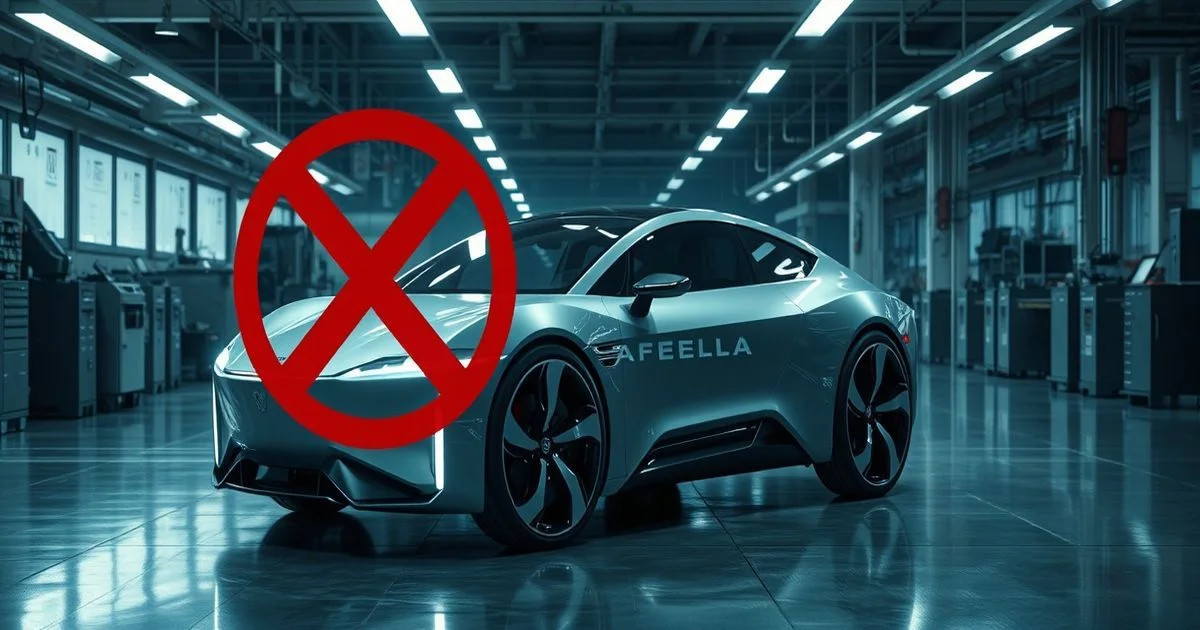
The ambitious joint venture between tech giant Sony and automotive stalwart Honda has taken an unexpected turn, as Sony Honda Mobility (SHM) announced today the discontinuation of its AFEELA electric vehicle (EV) development. This significant decision means the much-anticipated AFEELA 1 and its successor model will not reach the market as initially planned. The news that AFEELA EVs Halted: Sony Honda Scraps Car Plans sends ripples through both the automotive and technology sectors, marking a pivotal moment in the evolving landscape of electric mobility and collaborative innovation, particularly following Honda's recent overarching EV strategy overhaul.
- The Unexpected Halt: AFEELA EVs Halted: Sony Honda Scraps Car Plans
- Background: The Genesis of Sony Honda Mobility (SHM)
- Reasons Behind the Decision
- Industry Impact and Broader Implications
- Sony and Honda's Future Strategies
- Expert Perspectives
- Conclusion: The Future After AFEELA EVs Halted: Sony Honda Scraps Car Plans
- Frequently Asked Questions
- Further Reading & Resources
The Unexpected Halt: AFEELA EVs Halted: Sony Honda Scraps Car Plans
Today, Wednesday, March 25, 2026, marks a somber day for those awaiting the arrival of the AFEELA electric vehicle. Sony Honda Mobility (SHM), the brainchild of two Japanese industrial titans, confirmed its decision to cease the development and launch of its AFEELA vehicle lineup, including the AFEELA 1 and a second model that was already underway. This abrupt cancellation casts a shadow over a project that promised to blend cutting-edge entertainment technology with Honda’s renowned automotive engineering.
The announcement comes just weeks after SHM had celebrated the grand opening of its AFEELA Studio and Delivery Hub in Torrance, California, on March 21, 2026, further highlighting the suddenness of this strategic pivot. Customers who had placed reservations for the AFEELA 1 in California will receive full refunds of their reservation fees, as confirmed by SHM. This development has sparked widespread discussion about the volatile nature of the EV market and the complexities inherent in such high-profile cross-industry collaborations.
Background: The Genesis of Sony Honda Mobility (SHM)
The formation of Sony Honda Mobility in September 2022 was heralded as a groundbreaking alliance, uniting Sony's profound expertise in entertainment, sensors, and software with Honda's decades of experience in vehicle manufacturing and engineering. The vision was clear: to create "high value-added mobility products" that would redefine the in-car experience, leveraging advanced software and gaming capabilities to transform vehicles into rolling entertainment hubs. The joint venture aimed to challenge established EV manufacturers by offering a unique blend of technological sophistication and driving performance.
Vision and Ambition
The AFEELA brand was conceived to embody this ambitious vision. At various international tech and auto shows, SHM showcased prototypes that captivated audiences with sleek designs, immersive digital cockpits, and promises of advanced driver-assistance systems powered by an array of onboard sensors, including LiDAR. The AFEELA 1 was positioned as a premium electric sedan, designed not just for transportation but as a seamless extension of the digital lifestyle, integrating gaming, media, and connectivity in unprecedented ways. Enthusiasts eagerly anticipated its slated deliveries in California, which were expected to begin later this year. The integration of advanced driver-assistance systems, leveraging AI and sophisticated sensor arrays, was central to this vision, echoing broader trends in AI hardware innovation across various industries.
The AFEELA Concept Unveiled
The initial concept for AFEELA, first unveiled to the public, emphasized a deep integration of Sony's consumer electronics and content ecosystems. Imagine a car where the user interface was as intuitive as a smartphone, where gaming could be a passenger experience, and where the vehicle itself served as a personalized digital companion. This vision resonated strongly with a segment of the market looking for more than just efficient electric transport. The car’s aesthetic, coupled with its technological promises, set it apart in a crowded EV landscape, generating considerable hype around its impending launch. Pre-production trials for the AFEELA 1 had even commenced in August 2025 at Honda's East Liberty, Ohio plant, indicating significant progress towards market readiness.
Reasons Behind the Decision
The primary catalyst for the discontinuation of the AFEELA project stems directly from a recent and comprehensive reassessment of Honda's independent electrification strategy. On March 12, 2026, just weeks before SHM's announcement, Honda revealed a significant overhaul of its EV business. This strategic shift involved the cancellation of three planned North American EV models: the Honda 0 SUV, Honda 0 Saloon, and the Acura RSX EV. Crucially, these canceled Honda models were intended to share their underlying platform and core technologies with the AFEELA vehicles.
Shifting Market Dynamics
Honda's broader reassessment was driven by several factors, including a perceived slowdown in the expansion of the EV market, particularly in North America, by late 2025. The company cited "recent changes in the business environment," such as the easing of fossil fuel regulations, revisions to EV incentives, and intensifying competition from global manufacturers, especially those from China, as key contributors to its decision. These external pressures led Honda to conclude that it was struggling to deliver EVs that could compete effectively on value with newer market entrants.
Production and Supply Chain Realities
The cancellation of Honda's own 0 Series platform vehicles meant that SHM lost access to crucial technologies and production assets that Honda had initially committed to the joint venture. This fundamental alteration of the "underlying assumptions" for SHM's business operations left the joint venture without a viable path to bring the AFEELA models to market as originally envisioned. The scale required for mass production and the intricacies of supply chain management in the automotive industry necessitate stable foundational support, which was disrupted by Honda's internal strategic changes. The fact that AFEELA 1 was just months away from customer deliveries, with pre-production already underway, underscores the depth of the strategic re-evaluation that led to this decision.
Intense EV Competition
The global electric vehicle market has become intensely competitive, with new players emerging rapidly and established automakers pouring vast resources into their EV portfolios. The competitive landscape is characterized by aggressive pricing, rapid technological advancements, and shifting consumer preferences. Honda's acknowledgment that it was unable to offer "value for money better than that of newer EV manufacturers" highlights the immense pressure even seasoned automotive giants face. For a new brand like AFEELA, despite its unique tech-driven proposition, entering this environment without a robust and integrated manufacturing backbone proved too challenging once Honda's support changed. The starting price of the AFEELA 1 at $89,900, with a Signature trim at $102,900, paired with approximately 400 horsepower and 300 miles of range, might have also struggled to stand out in an increasingly crowded premium EV segment.
Financial Viability and R&D Costs
Developing new vehicle platforms is an extraordinarily capital-intensive endeavor, often requiring billions in research, development, and tooling costs. Honda's decision to cancel its own EV programs is expected to result in a massive writedown of as much as 2.5 trillion yen (approximately $15.7 billion USD). While both Sony and Honda have stated that the discontinuation of AFEELA's development is not expected to have a "material impact" on their respective consolidated financial results, largely due to SHM's "asset-light approach," this colossal write-down from Honda's side clearly signals the significant financial risks and challenges associated with EV expansion. The economic realities of the EV transition are forcing companies to make tough choices about resource allocation and strategic focus.
Industry Impact and Broader Implications
The news that AFEELA EVs Halted: Sony Honda Scraps Car Plans sends a strong signal across the automotive and technology industries. It underscores the immense challenges faced by even well-resourced joint ventures in the rapidly evolving and intensely competitive electric vehicle market. This event serves as a stark reminder that strategic partnerships, no matter how promising on paper, are vulnerable to shifts in parent company strategies and broader market forces.
A Blow to Tech-Automotive Convergence?
The AFEELA project was a prime example of the burgeoning trend of tech companies converging with traditional automakers. Sony, a leader in consumer electronics and entertainment, aimed to bring a fresh perspective to automotive design and user experience, while Honda offered manufacturing prowess. Its cancellation, therefore, represents a setback for the narrative that tech companies can seamlessly transition into large-scale automotive manufacturing through partnerships. It highlights the deeply ingrained complexities of vehicle production, regulatory compliance, and distribution that often prove challenging for newcomers or those without full control over the manufacturing base. Similar strategic shifts have also been observed in the AI sector, as seen with OpenAI's decision to shut down its Sora AI video app amid evolving priorities. The outcome prompts questions about the optimal models for tech and auto collaboration in the future, suggesting that deeper integration or more independent ventures might be necessary to mitigate such risks.
Lessons for Future Collaborations
The experience of SHM offers crucial lessons for any future cross-industry collaborations, particularly in high-capital sectors like automotive. First, the stability of foundational platforms and asset commitments from parent companies is paramount. Any unilateral strategic shift by a parent company can destabilize the joint venture's entire operational basis. Second, while an "asset-light" approach can minimize direct financial exposure for one partner, it may increase reliance on the other, creating systemic vulnerabilities. Finally, the market dynamics for new entrants, even those backed by established brands, remain exceptionally challenging, demanding not just innovation but also extreme cost-efficiency and strategic agility. The competitive pressures from both legacy automakers transforming their portfolios and agile EV startups require a robust and flexible long-term plan that can withstand market fluctuations and internal strategic adjustments.
Sony and Honda's Future Strategies
Despite the discontinuation of the AFEELA vehicles, both Sony and Honda have indicated that discussions regarding the future direction of Sony Honda Mobility will continue. This suggests that while the specific AFEELA models are scrapped, the underlying rationale for the joint venture – combining tech and auto expertise – may still hold value for the parent companies, albeit in a revised form.
Sony's Continued Mobility Ambitions
For Sony, its ambitions in the mobility space are unlikely to cease entirely. The company has consistently demonstrated a desire to extend its technological prowess, particularly in sensing, imaging, and entertainment, into new domains. While direct vehicle manufacturing through a joint venture proved challenging, Sony could pivot to a role as a key technology provider to other automakers. This might involve supplying advanced sensors, infotainment systems, or software platforms that power intelligent vehicle experiences. The experience gained through SHM, particularly in understanding automotive development cycles and integration challenges, could prove invaluable in shaping Sony's revised strategy for the mobility sector. The focus could shift from creating a branded car to enabling the next generation of smart vehicles through components and software, perhaps even leveraging advanced concepts like understanding vector embeddings for semantic search in future automotive interfaces.
Honda's Independent EV Path
Honda's reassessment of its electrification strategy, which directly led to the AFEELA project's halt, signals a major shift in its independent EV approach. The company's decision to cancel multiple North American EV models suggests a more cautious or recalibrated strategy, possibly prioritizing profitability and market fit over aggressive expansion at all costs. Honda may now focus on fewer, more strategically aligned EV models, or perhaps double down on hybrid technologies as a bridge during the transition. The company also faces the immense task of absorbing the financial impact of the recent cancellations, with writedowns estimated at 2.5 trillion yen. Its future EV roadmap will likely emphasize platforms and technologies that offer clearer competitive advantages and stronger financial returns, potentially with a renewed focus on in-house development or more selective partnerships. Honda's goal, as a traditional automaker, remains monetizing its manufacturing operations and selling cars in volume, a goal that its recent EV strategy reassessment aims to secure.
Expert Perspectives
The cancellation of the AFEELA project has prompted various reactions from industry analysts and experts, offering insights into the broader implications for the automotive and tech sectors.
Analyst Reactions
Analysts largely view Honda's decision as a pragmatic, albeit painful, response to challenging market realities. "Honda's massive writedown signals the tough choices facing legacy automakers as they pivot to EVs," noted one automotive industry analyst. "For AFEELA, it became collateral damage in Honda's necessary strategic recalibration". Others point to the inherent difficulties of joint ventures, especially when one partner undergoes a significant internal strategic shift. "When the core platform provider pulls back, a joint venture like SHM loses its foundation," commented a technology market observer. "It’s less about AFEELA's concept failing and more about the structural integrity of the partnership being compromised." The timing, with pre-production well underway and a recent hub opening, highlights the dynamic and unpredictable nature of long-term automotive projects.
What This Means for Consumers
For consumers, particularly those in California who had placed reservations for the AFEELA 1, the immediate impact is disappointment and the need for a refund. More broadly, this event could lead to a re-evaluation of expectations for highly integrated tech-auto vehicles. While the promise of a "smart car" remains, the path to market for such innovative concepts might be longer and more fraught with peril than previously imagined. It might also encourage consumers to consider the stability and long-term commitment of manufacturers when investing in new EV brands. The incident reinforces that the EV market is still maturing, and even well-backed projects are not immune to significant strategic shifts, ultimately affecting product availability and consumer choice.
Conclusion: The Future After AFEELA EVs Halted: Sony Honda Scraps Car Plans
The news that AFEELA EVs Halted: Sony Honda Scraps Car Plans represents a significant development in the electric vehicle landscape, underscoring the formidable challenges of bringing innovative, technology-infused cars to market in an intensely competitive environment. The core reason for this halt lies in Honda's broader strategic reassessment of its electrification efforts, which fundamentally altered the foundational support for the Sony Honda Mobility joint venture. While the immediate future for the AFEELA brand is one of cancellation and refunds, the long-term implications for both Sony and Honda remain under discussion. This event offers critical lessons for future collaborations, emphasizing the need for robust, flexible strategies and an acute awareness of market volatility. As the automotive world continues its inexorable shift towards electric power, the fate of AFEELA serves as a powerful reminder that even the most promising partnerships can be derailed by the complex realities of the industry. The evolution of mobility, though, will undoubtedly continue, with both Sony and Honda likely seeking new avenues to leverage their respective strengths in the years to come.
Frequently Asked Questions
Q: Why did Sony Honda Mobility halt AFEELA EV development?
A: The project was halted due to Honda's comprehensive reassessment of its independent electrification strategy. This shift led to the cancellation of Honda's own EV models that were intended to share their platform and technologies with AFEELA, removing the joint venture's foundational support.
Q: Will customers who reserved an AFEELA 1 receive a refund?
A: Yes, Sony Honda Mobility has confirmed that all customers who placed reservations for the AFEELA 1, particularly those in California, will receive full refunds of their reservation fees.
Q: What does this mean for the future of Sony and Honda's collaboration in mobility?
A: While the AFEELA EV models are canceled, both Sony and Honda stated that discussions about the future direction of Sony Honda Mobility will continue. This suggests they may explore other forms of collaboration, potentially with Sony acting as a technology provider and Honda focusing on a revised EV strategy.
Further Reading & Resources
- Sony Honda Mobility Official Site
- Honda Global Newsroom - Latest Announcements
- The Verge - Sony and Honda are killing off Afeela, their joint EV brand
- Automotive News - Honda rethinks EV strategy, cancels three North American models
- TechCrunch - Afeela EV plans scrapped as Honda recalibrates its electric future