A Beginner's Guide to the Rules of Field Hockey: Master the Game
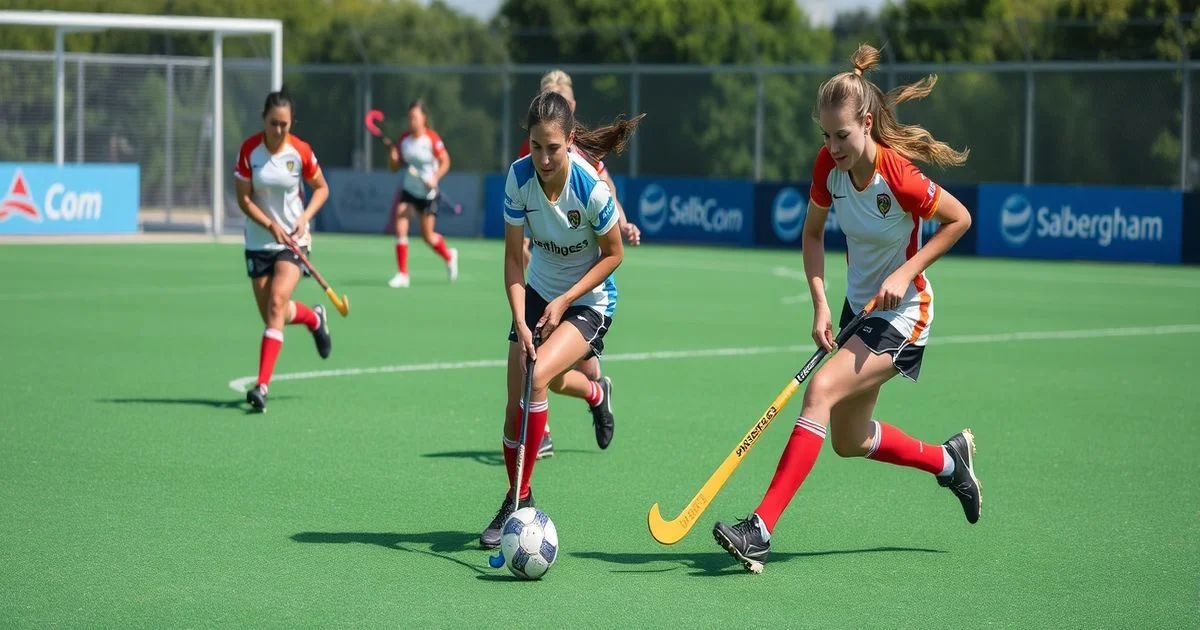
Field hockey, a sport blending precision, agility, and strategic thinking, often appears complex to newcomers. However, understanding its foundational rules is the first step to truly appreciating and even mastering the game. This comprehensive A beginner's guide to the rules of field hockey will deconstruct the sport into easily digestible segments, offering a deep dive into its mechanics, player roles, and the intricacies that make it such a compelling spectacle. Whether you're a budding player, a curious spectator, or a tech-savvy individual seeking to decode the dynamics of this ancient yet modern sport, this guide will illuminate the path to becoming a knowledgeable enthusiast.
- What is Field Hockey? A Brief Overview
- The Playing Field and Key Markings
- Essential Equipment for Players
- Player Positions and Their Roles
- Fundamental Rules of Play
- Starting, Stopping, and Restarting the Game
- Major Infringements and Penalties
- The Role of Officials: Umpires and Beyond
- Strategies and Tactics in Field Hockey
- A Beginner's Guide to the Rules of Field Hockey: Common Misconceptions and Key Takeaways
- Conclusion: Mastering the Dynamics of Field Hockey
- Frequently Asked Questions
- Further Reading & Resources
What is Field Hockey? A Brief Overview
Field hockey is a team sport played with a stick and a ball, where two teams of eleven players each compete to score by driving a small, hard ball into the opposing team's goal. It's a game of continuous motion, requiring exceptional hand-eye coordination, stamina, and tactical awareness. The game is often described as 'soccer with sticks,' sharing conceptual similarities with football but introducing unique challenges. For those interested in understanding the nuances of other stick-and-ball sports, delving into fundamental rules of cricket can provide an interesting comparative perspective. Field hockey's distinct rules are primarily centered around the use of the stick and the limited interaction with the ball.
The Objective of the Game
The primary objective in field hockey is straightforward: score more goals than your opponent. A goal is scored when the ball completely crosses the goal line between the posts and under the crossbar, having been hit or deflected by an attacking player from within the shooting circle (often called the 'D'). The game is divided into four quarters, typically 15 minutes each, with a short break between quarters and a longer halftime. The team with the most goals at the end of the specified playing time wins. In some formats, if scores are level, the game may proceed to a shootout.
Global Appeal and Major Tournaments
Field hockey boasts a rich history, with origins tracing back thousands of years. The modern game, codified in England in the mid-19th century, has since grown into a globally popular sport. It is particularly prominent in Europe, Asia, and Oceania, with nations like the Netherlands, Australia, Germany, Argentina, and India consistently ranking among the top teams. Field hockey is a core Olympic sport, featuring men's and women's tournaments that are among the most eagerly anticipated events. The competitive spirit and evolving policies around athlete participation make Olympic sports an area of continuous discussion. Other major international competitions include the FIH Hockey World Cup and the Hockey Pro League, showcasing elite talent and captivating strategic play on the world stage.
The Playing Field and Key Markings
The field hockey pitch, also known as a 'turf' or 'field,' is a precisely marked rectangular area, fundamental to understanding game flow and rule application. Modern pitches are predominantly artificial turf, offering a consistent and fast playing surface.
Pitch Dimensions and Surface
An international standard field hockey pitch measures 91.40 meters (100 yards) long and 55 meters (60 yards) wide. These dimensions are crucial for tactical play, dictating how teams spread out, build attacks, and defend. The sidelines mark the length of the pitch, while the backlines define its width, with the goal positioned centrally on each backline.
Artificial turf is now the preferred surface for competitive field hockey. It provides a flat, even playing field, allowing for fast ball movement and consistent bounce. The use of water-based turf, which is regularly watered, further reduces friction, increasing ball speed and player safety. This evolution from grass pitches has significantly transformed the game, favoring speed, skill, and precision over brute strength.
Crucial Zones: The D-Circle and 23-Meter Area
Two key areas on the pitch significantly influence gameplay and rule enforcement:
-
The Shooting Circle (The 'D'): This semi-circular area extends 14.63 meters (16 yards) from each goalpost. It is arguably the most critical zone on the field. All goals must be scored from within this area. If a player shoots from outside the D and the ball goes into the goal without touching an attacking player or being intentionally deflected by an attacker within the D, the goal is disallowed. This rule forces attacking teams to penetrate deep into opposition territory, creating intense skirmishes around the goal. The D-circle is also central to penalty corner rules.
-
The 23-Meter Area: This zone, extending 22.90 meters (25 yards) from each backline, acts as an important strategic boundary. Specific rules apply here to restarts and free hits, particularly regarding aerial balls and defensive play. For example, a free hit awarded to the attacking team within their opponent's 23-meter area cannot be hit directly into the D-circle unless it travels at least 5 meters (5.5 yards) first or is touched by another player. This rule encourages more intricate build-up play rather than long, speculative hits.
Understanding these markings is essential, as they dictate where goals can be scored, where specific fouls are penalized, and how the game restarts after the ball goes out of play.
Essential Equipment for Players
Field hockey requires specific equipment for both safety and effective gameplay. Each piece serves a distinct purpose, from striking the ball to protecting the player.
The Stick: Your Primary Tool
The field hockey stick is perhaps the most iconic piece of equipment. It is J-shaped or L-shaped, typically made from a combination of wood, fiberglass, carbon, or aramid, chosen for their balance of power, feel, and durability.
Key characteristics of the stick:
- Flat Side Only: A fundamental rule is that players can only use the flat side of their stick (the left side for right-handed sticks) to hit, push, or flick the ball. Using the rounded side (often called a 'backstick' or 'reverse stick' hit if executed properly) is an infringement. This rule significantly influences how players position their bodies and manipulate the ball, demanding precise technique and spatial awareness.
- Length and Weight: Sticks vary in length and weight, tailored to a player's height, strength, and preferred playing style. Shorter sticks often offer more control and agility, while longer ones can provide greater reach and leverage for powerful hits.
- Curvature (Bow): Modern sticks feature varying degrees of curvature or 'bow,' affecting ball control, drag flicking, and aerial skills. A greater bow can assist with lifting the ball and executing advanced techniques like the drag flick, which is a potent weapon in penalty corners.
Learning to control the ball with only the flat side of the stick is a core skill that defines field hockey and requires immense practice and precision.
The Ball and Protective Gear
Beyond the stick, other vital pieces of equipment ensure the game is played effectively and safely.
-
The Ball: Field hockey uses a small, hard, spherical ball, typically made of plastic or composite materials. It is slightly larger and harder than a golf ball, designed for rapid movement across the turf. Its weight and density allow it to travel at high speeds across the turf, demanding quick reactions from players. White is the traditional color, but other bright colors are often used for visibility against specific pitch colors or in varying light conditions.
-
Protective Gear: Player safety is paramount, especially given the speed of the ball and sticks.
- Shin Guards: Mandatory for all outfield players, shin guards protect the lower legs from impact with sticks or the ball during tackles and close-quarter play.
- Mouthguards: Also mandatory for all players (including goalkeepers when not wearing a helmet with a face mask), mouthguards protect teeth and gums from potential injury, which can be frequent in a sport with sticks and a hard ball.
- Gloves (Optional for Outfielders): Some outfield players wear padded gloves, particularly on their left hand, for added protection against stick and ball impacts. These are especially common for players involved in penalty corners or close defensive duties.
- Goalkeeper Gear: Goalkeepers wear extensive protective equipment, including a helmet with a cage, padded leg guards, kickers (for their feet), chest protectors, arm guards, and heavily padded gloves. This gear significantly increases their size and protects them from high-speed shots, allowing them to bravely face powerful strikes.
Players are responsible for ensuring their equipment meets safety standards and does not pose a danger to themselves or others. Umpires will often check equipment before games to ensure compliance.
Player Positions and Their Roles
Field hockey teams consist of eleven players on the pitch at any given time, including a goalkeeper. While formations and specific roles can vary, the fundamental responsibilities of attacking, midfield, and defensive players remain constant.
Attacking Prowess: Forwards
Forwards, also known as strikers, are primarily responsible for generating goal-scoring opportunities and putting the ball in the net. They operate predominantly in the opponent's half, constantly looking for space, making runs, and pressuring defenders.
- Key Responsibilities:
- Goal Scoring: Their ultimate objective is to score goals by getting into the D-circle and executing precise shots.
- Offensive Pressure: Harassing opposing defenders and goalkeepers, forcing errors, and winning the ball back high up the pitch.
- Creating Space: Drawing defenders away to open up passing lanes and shooting opportunities for teammates.
- Receiving Passes: Making intelligent runs and leads to receive passes in dangerous areas, often requiring excellent timing and anticipation.
Common forward positions include a central striker (often called a 'center forward') and two wingers ('right wing' and 'left wing'). Their success hinges on speed, agility, stick skills, and a clinical finishing touch.
The Engine Room: Midfielders
Midfielders are the workhorses of the team, linking defense and attack. They cover the most ground during a game, transitioning between offensive and defensive duties, controlling the pace and flow of play.
- Key Responsibilities:
- Ball Distribution: Connecting with defenders to initiate attacks and supplying forwards with scoring opportunities through accurate and incisive passes.
- Defensive Support: Dropping back to help defenders, marking opponents in central areas, and intercepting passes in the middle third of the field.
- Possession Control: Maintaining possession, dictating the tempo of the game, and exploiting gaps in the opposition's structure.
- Initiating Press: Leading the team's defensive pressure high up the pitch, attempting to win the ball back quickly.
Midfielders require exceptional stamina, vision, and ball control. They are the strategic hub of the team, influencing both ends of the pitch.
Defensive Backbone: Defenders and the Goalkeeper
Defenders are the last line of defense before the goalkeeper, tasked with preventing the opposition from scoring. They play a crucial role in intercepting attacks, clearing the ball, and initiating counter-attacks.
- Key Responsibilities:
- Marking Opponents: Tightly guarding opposing forwards to prevent them from receiving passes or taking shots on goal.
- Tackling: Skillfully dispossessing opponents of the ball without committing fouls, often requiring precise stick work and timing.
- Clearing the Ball: Effectively moving the ball out of dangerous areas, especially from within and around the D-circle.
- Building Play: Initiating attacks from the back, often with long, accurate passes to midfielders or forwards.
Common defensive positions include center-backs (also known as 'fullbacks') and wing-backs. Their strength lies in their tackling ability, positional awareness, and composure under pressure.
The Goalkeeper:
The goalkeeper is a specialized player with unique privileges and equipment. Their primary role is to defend the goal by any means necessary, within the rules.
- Key Responsibilities:
- Shot Stopping: Blocking shots with their body, stick, or heavily padded equipment.
- Communication: Directing defenders, organizing the defensive setup, and calling out threats to the goal.
- Distributing the Ball: Quickly clearing the ball to start counter-attacks after a save, often with long pushes or kicks.
Unlike outfield players, goalkeepers are allowed to use any part of their body to stop the ball within the D-circle. However, they cannot intentionally lie on the ball or use their body to create a dangerous situation for an opponent or to deliberately hold up play. Their reflexes, bravery, and organizational skills are vital to the team's success.
Fundamental Rules of Play
Understanding the core mechanics of ball movement, interaction, and safety is crucial for any beginner. Field hockey rules are designed to promote continuous, flowing play while ensuring player safety.
The Push, Hit, Flick, and Scoop: Mastering Ball Movement
Unlike sports where the ball can be kicked or thrown, field hockey players must move the ball exclusively with their stick. There are several fundamental techniques for doing so:
- The Push: A controlled, accurate way to pass or shoot, where the stick is placed against the ball and pushed along the ground. There is no backswing, making it very precise and quick over short distances. It's often used for short passes, dribbling, and penalty corner injections.
- The Hit: The most powerful way to move the ball, involving a significant backswing and follow-through. Hits are used for long passes, powerful shots on goal from outside the D, and clearing the ball from defensive areas. Due to its power, specific rules govern its use, especially when near other players, to prevent dangerous play.
- The Flick: A semi-aerial technique where the ball is lifted off the ground, often over a short distance. It involves dragging the ball along the ground with the stick before propelling it upwards. Flicks are used to pass over opponents' sticks, score goals from penalty corners (the 'drag flick' being a specialized, powerful version), or clear the ball from defensive situations.
- The Scoop: A technique used to lift the ball high into the air, typically for long aerial passes or to launch the ball over an opponent. It requires significant skill and is governed by strict rules regarding dangerous play. A scoop must be executed carefully to avoid endangering players who are closely marked or unaware, and its trajectory must be controlled.
The Obstruction Rule: Understanding Player Interference
Obstruction is one of the most common fouls in field hockey. It occurs when a player positions themselves between an opponent and the ball, using their body to prevent the opponent from playing the ball, rather than attempting to play the ball themselves. The rule dictates that a player must always be in a position to play the ball legally with their stick.
- Shielding: Players cannot "shield" the ball with their body to prevent an opponent from tackling. They must move the ball and their stick concurrently, allowing the opponent fair access.
- Stationary Obstruction: A player cannot simply stand still to block an opponent's access to the ball if they are not actively trying to play the ball with their stick.
- Stick Obstruction: Players cannot use their stick to block an opponent's stick or prevent them from playing the ball legitimately, even if they are attempting to play the ball themselves.
The essence of the obstruction rule is to ensure fair access to the ball for both teams, promoting open play and discouraging defensive holding tactics.
Backsticks and Dangerous Play: Ensuring Safety
Two critical rules prioritize player safety and fair play:
- Backsticks (Using the Rounded Side of the Stick): As mentioned earlier, only the flat side of the stick can be used to play the ball. Using the rounded side is a foul, as it can make ball control unpredictable and potentially dangerous, especially when striking the ball. This applies to both deliberate and accidental use of the back of the stick.
- Dangerous Play: This is a broad category encompassing actions that could cause injury to another player or lead to an unfair advantage through reckless behavior. Examples include:
- High Ball: Hitting the ball dangerously high towards another player, especially if it flies above shoulder height without controlled intent. This is often penalized unless it's a controlled flick or scoop in open space, or a shot on goal within the D.
- Hard Hit into a Crowd: Striking the ball with excessive force into a group of players from close range, where there's a high risk of hitting someone.
- Playing the Ball While Lying Down: Attempting to play the ball from the ground, which can create a hazard for standing players and puts the player on the ground at risk.
- Tackling from the Wrong Side: Tackling in a manner that puts an opponent's body or stick at risk, often involving tackling across the body or without playing the ball first.
Umpires have significant discretion in judging dangerous play, always prioritizing player safety above all else.
Third-Party Obstruction
A variation of the obstruction rule, third-party obstruction occurs when a player positions themselves between an opponent and the ball, not to play the ball themselves, but to allow a teammate to gain possession or maintain control. This is also considered an infringement, as it unfairly limits an opponent's access to the ball through indirect means. For instance, if Player A runs in front of an opponent to block them, allowing Player B to pick up a loose ball, Player A commits third-party obstruction.
Stick Interference
Stick interference refers to illegally interfering with an opponent's stick. Players are allowed to tackle an opponent's stick to dispossess them of the ball, provided they play the ball first and the tackle is clean and legal. However, deliberately hooking, holding, or chopping an opponent's stick without playing the ball is a foul. This ensures that players compete for the ball directly, rather than impeding an opponent's ability to control their stick.
Ball Height and Aerial Play
The rules concerning ball height are critical for player safety. Generally, the ball must be played along the ground, especially in congested areas. However, there are exceptions and nuances:
- Controlled Aerials: A player may intentionally lift the ball using a flick or scoop, provided it does not create dangerous play. If the ball is lifted and there is no player in the immediate vicinity to be endangered by its trajectory or landing, it is often permitted. Such aerial passes are skillful and can be used to bypass congested midfield areas.
- Dangerous Height: A lifted ball is deemed dangerous if it is likely to cause legitimate fear of injury to an opponent who is within playing distance of the ball, or if it falls into a group of players from a significant height. The umpire will assess the context, speed, and proximity of other players, as well as the intent and control of the player who lifted the ball. A ball flying above shoulder height towards an opponent in close proximity is almost always considered dangerous.
- Shots on Goal: When a shot on goal is taken from within the D-circle, the ball can be lifted to any height towards the goal, as long as it is not dangerous at the point of origin or intentionally aimed at a defender's body. Once the ball is in flight towards the goal, it does not automatically become dangerous simply because a defender runs into its path; however, if the shot is recklessly high and directly aimed at a defender's head from close range, it could still be penalized. This distinction allows for exciting aerial shots while maintaining player safety.
These detailed rules ensure a balance between allowing skillful aerial play and safeguarding players from injury.
Starting, Stopping, and Restarting the Game
The game's flow is punctuated by various restarts, each with specific rules governing their execution. Understanding these is key to following the tactical battles.
The Centre Pass: Kicking Off
The game begins with a centre pass, and restarts after every goal and at the start of each half (or quarter).
- Execution: The ball is placed at the center of the pitch. All players must be in their own half of the field. The player taking the centre pass must push or hit the ball backwards to a teammate.
- Opponent's Position: Opponents must be at least 5 meters (5.5 yards) away from the ball until it is played.
- Self-Pass Rule: The player taking the centre pass can play the ball to themselves (a 'self-pass') by touching it, then immediately dribbling or passing it. This speeds up the restart, keeping the game flowing.
Side-ins and Long Corners: When the Ball Goes Out
When the ball goes out of play over the sidelines or backlines, the game is restarted with either a side-in, a long corner, or a 16-yard hit.
- Side-in (Hit-in): If the ball goes over the sideline, it is restarted by an opponent of the player who last touched it. The ball is placed on the sideline at the point where it went out, and a free hit is taken. All players must be at least 5 meters away from the ball until it is played.
- Long Corner (23-Meter Hit): If an attacking player unintentionally sends the ball over the opponent's backline from outside the 23-meter area, a long corner is awarded to the attacking team. The ball is placed on the 23-meter line, in line with where it went out, and a free hit is taken. Opponents must be 5 meters away from the ball until it is played.
- Corner from the Attacker: If the ball goes over the backline from an attacking player inside the 23-meter area, it results in a 16-yard hit for the defense.
16-Yard Hits: Defending the Goal Area
When a defending player unintentionally sends the ball over their own backline from anywhere within their 23-meter area (and it's not a goal), or if an attacking player commits a foul within the D-circle, a 16-yard hit (or '16') is awarded to the defending team.
- Execution: The ball is placed on the 16-yard line (14.63 meters) directly in line with where it crossed the backline or where the foul occurred.
- Opponent's Position: All attacking players must be outside the 23-meter area until the ball is played. Defenders may be anywhere on the pitch.
- Self-Pass Rule: Like free hits, the player taking the 16-yard hit can self-pass, dribbling the ball away from the danger area.
Free Hits: Minor Infringements
Free hits are awarded for minor infringements outside the shooting circle.
- Location: The free hit is taken at the spot where the infringement occurred.
- Opponent's Position: All opponents must be at least 5 meters (5.5 yards) from the ball until it is played. If the free hit is awarded within 5 meters of the D-circle to the attacking team, the ball must be moved back to the 5-meter mark from the D to ensure fair play and prevent immediate entry.
- Self-Pass Rule: The player taking the free hit can self-pass, allowing for quick restarts and maintaining game flow.
- Specific Rule for Attacking Free Hits in 23-Meter Area: If an attacking team is awarded a free hit within the opposition's 23-meter area, they cannot hit the ball directly into the D-circle. It must travel at least 5 meters or be touched by another player before it can enter the D. This rule encourages more intricate attacking play and prevents long, speculative hits from outside the D.
These varied restarts ensure that play continues efficiently and fairly after interruptions, maintaining the dynamic nature of the game.
Major Infringements and Penalties
While minor fouls result in free hits, more serious infringements, especially those that deny a goal-scoring opportunity, lead to more severe penalties: penalty corners and penalty strokes.
Penalty Corners: A High-Stakes Opportunity
The penalty corner (often just called a 'corner') is one of the most exciting and strategically vital set pieces in field hockey. It's awarded for:
- A foul committed by a defender inside the D-circle that does not prevent a probable goal, or is not deemed severe enough for a penalty stroke.
- An intentional foul by a defender outside the D but inside the 23-meter area.
- A defender intentionally sending the ball over their own backline (e.g., to waste time or prevent a dangerous attack).
Execution of a Penalty Corner:
- Attackers: Up to five attacking players start outside the D, near the baseline. One attacker (the 'injector') places the ball on the backline, 10 meters from the goalpost on either side. The remaining attackers wait outside the D, ready to receive and shoot.
- Defenders: A maximum of five defenders (including the goalkeeper) stand behind their own backline, inside the goal. The remaining six defenders must wait at the halfway line until the ball is injected.
- The Injection: The injector pushes or hits the ball along the ground to a teammate waiting at the top of the D.
- Stop and Shoot: Before a shot on goal can be taken, the ball must be stopped dead outside the D (usually by a 'stopper'). Only then can a shot be taken.
- Direct Shot Rule: The first shot on goal from a penalty corner must be a push, flick, or scoop if it is lifted. A hard hit that lifts the ball above the backboard (46cm high) is only allowed if it's hit from the top of the D. Subsequent shots can be lifted at any height, provided they are not dangerous.
- Breaking the Line: If a defender breaks early (before the ball is injected), they are sent to the halfway line. If an attacker breaks early, they are also sent to the halfway line, and the corner is retaken.
Penalty corners are highly tactical, often involving choreographed routines to create goal-scoring opportunities, making them a significant part of a team's offensive arsenal.
Penalty Strokes: The Ultimate Goal-Scoring Chance
The penalty stroke is the most severe penalty in field hockey, representing a direct one-on-one duel between an attacker and the goalkeeper. It is awarded for:
- A foul by a defender inside the D-circle that prevents a probable goal from being scored (e.g., stopping a ball going into the goal with their body or committing a serious foul during a goal-scoring opportunity).
- An intentional foul by a defender inside the D-circle against an opponent who has possession of the ball or an opportunity to play the ball, thereby denying a likely goal.
Execution of a Penalty Stroke:
- Placement: The ball is placed on the penalty spot, 6.4 meters (7 yards) directly in front of the center of the goal.
- Players: Only the attacker taking the stroke and the defending goalkeeper are involved. All other players must be beyond the 23-meter area until the stroke is completed.
- The Stroke: The attacker pushes, flicks, or scoops the ball towards the goal in one continuous movement. They cannot feint, feign a shot, or play the ball more than once.
- Goalkeeper's Action: The goalkeeper must remain stationary on their goal line with their feet until the ball is played. They cannot move forward or sideways until the attacker makes contact with the ball.
A penalty stroke offers a high probability of scoring, making its award a critical moment in a game.
Personal Penalties: Cards and Suspensions
Umpires can issue personal penalties to players for misconduct, ranging from warnings to temporary or permanent suspensions.
- Green Card: A warning for minor infringements, dissent, or poor behavior. The player may be temporarily suspended for 2 minutes (depending on local league rules) or simply given a stern warning. This serves to remind players of their responsibilities.
- Yellow Card: A temporary suspension from the game, typically for 5 or 10 minutes. This is issued for more serious fouls, repeated infringements, or overt dissent. The team plays with one player less for the duration of the suspension, which can significantly impact the game by creating numerical disadvantages.
- Red Card: A permanent exclusion from the game. This is given for dangerous play intended to injure, violent conduct, or extreme misconduct. The player cannot return, and their team plays with one player less for the remainder of the match. A red card usually results in further disciplinary action after the game, including potential bans.
These cards are crucial for maintaining discipline, safety, and the spirit of fair play within the sport.
The Role of Officials: Umpires and Beyond
The integrity and fairness of field hockey rely heavily on the impartial judgment of its officials. Umpires are the primary enforcers of the rules, while technology increasingly plays a supporting role.
Maintaining Fair Play: The Umpire's Responsibilities
Typically, two umpires officiate a field hockey match, each responsible for half of the field. Their duties extend far beyond simply blowing a whistle.
- Rule Enforcement: Umpires apply the rules of the game consistently and fairly, penalizing infringements and ensuring player safety according to the FIH rulebook.
- Game Management: They manage the flow of the game, stopping play for fouls, restarts, and injuries, and restarting it efficiently. They also manage player behavior, issuing cards as necessary to maintain discipline.
- Communication: Effective communication with players, coaches, and each other is vital. Umpires use clear hand signals to indicate fouls and restarts, making their decisions transparent to everyone on and off the pitch.
- Pre-Game and Post-Game Duties: Before a match, umpires inspect the pitch, goals, and player equipment for safety and compliance. After the game, they complete match reports, noting any significant incidents or carded players for official records.
Umpires undergo extensive training and certification to ensure a high standard of officiating, enabling them to make quick and accurate decisions in a fast-paced environment. Their decisions are final on the field, though serious disputes can sometimes be reviewed by technical officials or video referees in elite competitions.
Technology in Modern Field Hockey
Just like many other major sports, field hockey has embraced technology to enhance officiating accuracy and spectator experience.
- Video Umpire (Video Referral System): At elite levels, particularly in international tournaments like the Olympics or World Cup, a video umpire system is in place. Teams are typically allowed a limited number of referrals to challenge certain on-field decisions (e.g., whether a goal was valid, whether a foul occurred inside or outside the D, or dangerous play). The video umpire reviews footage from multiple angles and advises the on-field umpire, who then makes the final decision. This adds an extra layer of fairness and reduces controversial calls.
- Goal-Line Technology: While not as universally implemented as in soccer, discussions around goal-line technology to definitively determine if the ball has fully crossed the line are ongoing, with some major events trialing or using such systems.
- Real-Time Data and Analytics: Beyond officiating, technology is used extensively by teams for player performance analysis, strategy development, and tactical adjustments. Wearable sensors, GPS tracking, and advanced video analysis provide coaches with invaluable data on player movement, speed, and efficiency. This data informs training regimes and in-game decisions, reflecting the broader trend of data-driven performance analysis in sports.
The integration of technology underscores field hockey's commitment to precision, fairness, and continuous improvement, mirroring the advancements seen across the broader tech landscape. This drive for structured governance in sports also reflects global discussions around new rules for workplace and governance emerging globally in AI.
Strategies and Tactics in Field Hockey
While understanding the rules is fundamental, true mastery of field hockey involves strategic thinking and tactical execution. Teams employ various formations and game plans to exploit weaknesses and capitalize on their strengths.
Formations and Flow: Shaping the Game
Teams typically adopt specific formations, which dictate how players are positioned across the pitch. These formations are fluid and adapt throughout the game, but provide a basic structure. Common formations include:
- 4-3-3: Four defenders, three midfielders, three forwards. This is an inherently attacking formation, aiming to put sustained pressure on the opponent's defense and create numerous scoring opportunities through width and depth in attack.
- 3-5-2: Three defenders, five midfielders, two forwards. This formation emphasizes midfield control, allowing for strong defensive support and versatile attacking options, especially through the wider midfielders who can push forward or drop back. It aims to dominate the central areas.
- 4-4-2: Four defenders, four midfielders, two forwards. A balanced formation offering solidity in defense and a structured approach to attack. It provides good coverage across the pitch and is often seen as a reliable, versatile choice.
The choice of formation depends on the team's strengths, the opponent's style, and the game situation. Coaches constantly adjust tactics, instructing players to shift positions, press high, or drop deep, to respond to the evolving dynamics of the match. The flow of the game is dynamic, with players moving into and out of these defined roles as the play unfolds, creating complex patterns of movement.
Attacking vs. Defensive Mindsets
A team's overall strategy often leans towards an attacking or defensive mindset, though the most successful teams are adept at balancing both:
- Attacking Strategy: Characterized by high pressing (attempting to win the ball back deep in the opponent's half), quick ball movement, intricate passing sequences (often involving 'give-and-go' passes), and a relentless focus on penetrating the D-circle. Attacking teams prioritize possession, creating overlaps on the wings to stretch defenses, and unleashing powerful shots or deflections on goal. They aim to overwhelm the opponent through sheer offensive volume.
- Defensive Strategy: Focuses on organized marking (both zonal and man-to-man), strong and clean tackling, intercepting passes in critical areas, and quickly transitioning from defense to attack. Defensive teams often employ a deep press, forcing opponents wide and into less dangerous areas, and relying on swift counter-attacks once possession is won. Goalkeepers are central to defensive strategy, not just in shot-stopping but also in directing their defenders, communicating defensive lines, and initiating clearances that turn into offensive opportunities. This approach prioritizes denying space and frustrating the opponent.
Successful teams often blend these mindsets, adapting their approach based on the scoreline, time remaining, energy levels, and opponent's tactics. The ability to switch between offensive and defensive modes seamlessly, often within seconds, is a hallmark of elite field hockey.
A Beginner's Guide to the Rules of Field Hockey: Common Misconceptions and Key Takeaways
Field hockey, like any sport with nuanced regulations, can be a source of common misunderstandings, particularly for those new to the game. Dispelling these myths and highlighting key takeaways will solidify your grasp of the sport.
Common Misconceptions
- "It's just like soccer with sticks." While there are superficial similarities (two goals, a ball, team play), the fundamental mechanics differ significantly. The stick-only rule, the D-circle for scoring, and specific fouls like obstruction and backsticks create a unique tactical landscape. Unlike soccer, there's no offside rule in modern field hockey, which dramatically impacts attacking strategies and the way teams defend.
- "The ball must always stay on the ground." This is partially true, but not absolute. While the general principle is ground play to ensure safety and control, controlled flicks and scoops are permissible and are vital attacking and defensive tools, provided they are not deemed dangerous to other players. Shots on goal from within the D can also be lifted to any height, making the penalty corner a highly lethal weapon.
- "Goalkeepers can do anything within the D." Goalkeepers do have special privileges within their D-circle, notably being able to use any part of their body to stop the ball. However, they cannot intentionally lie on the ball, fall on it to cover it, or use their body in a way that creates a dangerous situation or prevents an opponent from legally playing the ball. Their actions are still subject to dangerous play and obstruction rules.
- "Any contact is a foul." Field hockey is a physical sport where players compete vigorously for the ball. Legal stick-on-stick tackles, where the ball is played cleanly without impeding the opponent's stick or body, are part of the game. A foul only occurs when there is illegal stick interference, body obstruction, dangerous play, or other specific rule infringements that unfairly impede an opponent or put them at risk.
Key Takeaways for Understanding the Game
To truly appreciate the dynamism and skill of field hockey, keep these core principles in mind:
- Stick-Only Play: The foundation of the game is that the ball can only be played with the flat side of the stick. This constraint dictates player positioning, tackling techniques, and ball control, making it a highly technical sport.
- The Importance of the D-Circle: All goals must originate from within the D-circle. This makes the area around the goal a constant hotbed of action, where defensive solidity meets offensive creativity and high-stakes opportunities arise.
- Safety First: Rules like dangerous play, backsticks, and specific restrictions on aerial balls are paramount to player safety. Umpires constantly monitor these to prevent injuries and maintain the integrity of the game.
- Continuous Flow: Despite fouls and restarts, field hockey is designed for continuous movement and quick transitions. The self-pass rule, for instance, minimizes stoppages, contributing to the fast-paced and exciting nature of the sport.
- Strategic Depth: Beyond individual skills, field hockey is a highly tactical game. Formations, pressing strategies, and set-piece routines (like penalty corners) are meticulously planned and executed, adding layers of intellectual challenge and requiring constant adaptation.
By focusing on these fundamental aspects, you'll gain a deeper understanding of why the umpire blew the whistle, why a particular strategy was chosen, and how seemingly minor actions contribute to the overall ebb and flow of the match.
Conclusion: Mastering the Dynamics of Field Hockey
Embarking on A beginner's guide to the rules of field hockey is more than just learning regulations; it's about unlocking the intricate ballet of strategy, skill, and athleticism that defines this global sport. From the precise dimensions of the pitch to the nuanced distinctions between a push and a flick, every rule contributes to the unique character of field hockey. We've explored the critical role of the D-circle, the specific duties of each player position, and the pivotal moments created by penalty corners and strokes, which can dramatically shift the momentum of a game.
Understanding these rules allows you to transcend mere observation, transforming you into an informed spectator who can appreciate the tactical genius and individual brilliance on display. For aspiring players, this foundational knowledge is the springboard for developing the technical skills and game sense required to excel. Field hockey is a sport of continuous learning, evolving tactics, and unwavering dedication, where the smallest details can have the largest impact. With this comprehensive guide, you now possess the essential framework to confidently engage with the game, whether from the stands or with a stick in hand. Embrace the challenge, enjoy the pace, and delve deeper into the fascinating world of field hockey.
Frequently Asked Questions
Q: Can field hockey players use both sides of their stick?
A: No, a fundamental rule dictates that players can only use the flat side of their stick to play the ball. Using the rounded side, often called a 'backstick,' is an infringement that can lead to a foul. This rule is crucial for maintaining control and safety in the game.
Q: What is the 'D' in field hockey?
A: The 'D' or shooting circle is a semi-circular area extending 14.63 meters (16 yards) from each goalpost. All goals in field hockey must be scored from within this area, meaning an attacking player must hit or deflect the ball from inside the D for a goal to be valid.
Q: Why do umpires show cards in field hockey?
A: Umpires use green, yellow, and red cards to manage player conduct and penalize infringements. A green card is a warning (sometimes a 2-minute suspension), a yellow card is a temporary suspension (5-10 minutes), and a red card is a permanent exclusion from the game for serious misconduct or dangerous play.